Cardinal among ten charged by Vatican over London property scandal
Crimes identified by the Vatican magistrates are fraud, embezzlement, abuse of office, money-laundering, extortion, false documentation, falsified internal agreements…
Read MoreSelect Page
Crimes identified by the Vatican magistrates are fraud, embezzlement, abuse of office, money-laundering, extortion, false documentation, falsified internal agreements…
Read MoreThe pope has intestinal operation, expected to remain in Rome hospital for seven days.
Read MoreThe Catholic bishops of Saskatchewan have begun the process for a new fundraising campaign to support survivors of residential schools.
Read MoreCardinal Péter Erdő at a press conference for the International Eucharistic Congress in Budapest, June 14, 2021. / IEC 2021 Budapest
Budapest, Hungary, Jul 5, 2021 / 07:35 am (CNA).
Church leaders in Hungary and Slovakia have welcomed Pope Franc…
American Flag. / Kim Hill via Flickr (CC BY-ND 2.0) filter added.
Washington D.C., Jul 5, 2021 / 07:00 am (CNA).
The Pledge of Allegiance didn’t always include the words “under God.”When it was first composed, the pledge made no reference to God…
VATICAN CITY — The morning after undergoing colon surgery, Pope Francis was in “good general condition, alert and breathing spontaneously,” the Vatican press office said July 5.
Read MorePosted by bcadmin | Jul 5, 2021 | Cardinal Pietro Parolin, Catholic Church, Catholic news, France, News, secularism, The Dispatch |
Strasbourg, France, Jul 5, 2021 / 05:45 am Cardinal Pietro Parolin said on Sunday that Europe needs faith in God as it struggles with a “demographic winter.” Preaching at Mass in Strasbourg Cathedral in France […]
Read MoreThe Vatican is seeking indictments against ten people— including Cardinal Angelo Becciu— and four corporations in connection with a financial scandal over a London real-estate deal.
Read MoreUna Voce International, a coalition of groups that support the traditional Latin Mass, took out a full-page ad in the Italian daily La Repubblica on July 4 to argue against those “within the Church, including some bishops, who would like to see t…
Read More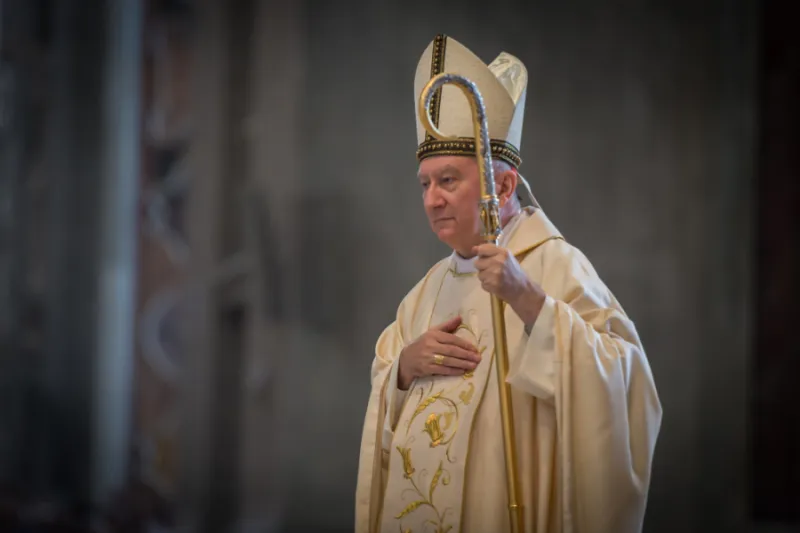 Cardinal Pietro Parolin, pictured in St. Peter’s Basilica Oct. 3, 2015. / Mazur/catholicnews.org.uk.
Strasbourg, France, Jul 5, 2021 / 05:45 am (CNA).
Cardinal Pietro Parolin said on Sunday that Europe needs faith in God as it struggles with a “demographic winter.”
Preaching at Mass in Strasbourg Cathedral in France on July 4, the Vatican Secretary of State urged the continent to rediscover its Christian roots.
“Europe needs hope if it wants to put an end to the demographic winter, which is not primarily the result of an economic or social crisis, but of the weakening of hope and the authentic meaning of life and existence,” he said.
He continued: “Europe needs faith in God, who is Father; it needs confidence in its potential, especially spiritual.”
His comments follow a speech by Pope Francis in May highlighting the low birth rate of many European countries.
Parolin was celebrating a Mass marking 1,300 years since the death of St. Odile, patron saint of Alsace, a region in northeastern France bordering Germany and Switzerland.
In addition to serving as papal legate at the anniversary celebration, the Italian cardinal ordained Msgr. Gilles Reithinger, former superior general of the Paris Foreign Missions Society, as an auxiliary bishop of Strasbourg archdiocese at the Mass.
In his homily, Parolin emphasized the importance of charity in renewing Europe.
“Europe needs charity, to put at the center of its concerns those who survive on the margins, in poverty or in exclusion, and to manage the migratory phenomenon with wisdom and foresight, so as to make a real integration feasible, which becomes a source of opportunity and fraternity, and removes the risk of separations and painful misunderstandings, specters of a culture that denies that all human beings are brothers and sisters, fratelli tutti,” he said, citing the title of Pope Francis’ 2020 encyclical.
The 66-year-old cardinal had originally planned to visit Strasbourg last year, but was forced to cancel trips in June and November due to the coronavirus pandemic.
He had intended to visit the city on the France-Germany border to mark the 50th anniversary of the Holy See’s presence as a permanent observer at the Council of Europe, a human rights organization based in Strasbourg.
He began his two-day visit with a meeting on the topic of Europe. In an address, he said that the Holy See had shown “a strong and lively interest in the work of the European Institutions” since their inception.
He recalled Francis’ visit to Strasbourg in 2014, during which the pope addressed both the Council of Europe and the European Parliament, which is also based in the city.
“Europe is particularly dear to Pope Francis, not only because of his family origins, but also because of the central role in the history of humanity,” Parolin said, referring to the Argentine pope’s Italian ancestry.
“He hoped that Europe could rediscover its Christian roots, starting from this path of fraternity, which undoubtedly inspired and animated the Founding Fathers of modern Europe, beginning precisely with Robert Schuman,” the cardinal said, highlighting the French statesman declared “venerable” by the pope last month.
Parolin said that in a pluralistic Europe, the Church’s task was to “elevate man” not only in his body, “but also in his soul and spirit.”
“Without respect for man in his natural and supernatural dignity of being in the image and likeness of God, his Lord and Creator, society will never be better,” he said.
In conclusion, Parolin said, “whoever wants to create a just, equitable, supportive and fraternal humanity must place man and his dignity at the center.”
“Man, however, is not the one who was conceived by man, but the one who was created by the Lord in his own image and likeness. It is the Christian who lives in Christ, who creates, once again, the history of the Church and the history of Europe and humanity.”
“Great is the responsibility of the Christian, great is your mission in this city, the European capital.”
Before the Mass and episcopal ordination, Parolin addressed the political and civil leaders of Alsace, a terrority that returned to French control in 1945 after several periods of German rule.
He noted that the region is still governed by the provisions of the Concordat of 1801 agreed by Napoleon Bonaparte and Pope Pius VII.
He observed that Msgr. Reithinger’s appointment as an auxiliary bishop of Strasbourg followed the process outlined in the Concordat, with the nomination approved by French President Emmanuel Macron and published in the Official Journal of the French Republic, the government gazette, on June 26.
Parolin reflected on how the French Revolution that preceded the concordat sought to split religion and politics apart.
“The French Revolution radically altered the age-old confrontation between Church and state, because for the first time it was claimed that the Church — and with it religion in general — was excluded from the social sphere,” he said.
He traced the Church’s response to this historic development, underlining the importance of the Second Vatican Council’s recognition of the “autonomy of earthly affairs.”
He said that concordats signed by the Church in modern times acknowledged both the independence of Church and state and their interdependence.
He suggested that “where concordats, agreements or conventions exist, a positive relationship of collaboration tends to develop between the state authorities and the religious authorities.”
“When such positive cooperation exists, it is also easier for the state to guarantee a space of freedom and respect for human rights for all,” he said.
“This is particularly true in this region, which, thanks to the Concordat, which is still valid today, has been able to develop its undisputed vocation as a crossroads of encounter and brotherhood, not only between the peoples who have inhabited this land for centuries, but also for all of contemporary Europe, which took its first steps here after the wounds of the Second World War.”
Speaking to journalists in Strasbourg on July 4, Parolin welcomed a Vatican judge’s decision to indict 10 people for alleged financial crimes.
He said he hoped that the trial would be short and uncover the truth about a financial scandal centered on the Vatican’s purchase of a London property, which, he said, had “made many people suffer.”
On Monday, the final day of his visit, Parolin was expected to visit the headquarters of the Council of Europe, meeting the organization’s Secretary General Marija Pejčinović Burić, as well as other senior officials.
He was also due to celebrate a Mass attended by young people at the Sanctuary of Mont Sainte-Odile, marking 90 years of perpetual adoration at the site.
Posted by bcadmin | Jul 5, 2021 | Editor's Corner, News |
Saint Anthony Zaccaria (+1539), from noble lineage in late-renaissance Italy, was born in Rome in 1502, on the cusp of the Protestant revolt against the Catholic Church. But this was mostly in far-off northern Europe, and did not impact Anthony’s life at first. He studied medicine, which he practised for three years, after which he underwent[…]
The post Saint Anthony Zaccaria appeared first on Catholic Insight.
Read MoreCatholic author and speaker Elizabeth Kelly joins us for a discussion of the supposed “anti-woman” bias in Christianity. Is it real, or is it just a modern story disconnected from historical reality? Kelly is the author of books for and abo…
Read MorePosted by bcadmin | Jul 5, 2021 | Catholic Church, Church in Asia, Church in India, Father Stan Swany, India, lead, News |
An 84-year-old Jesuit priest who had been imprisoned in India since October 2020 died Monday morning in a hospital in Mumbai where he had been since May. He had been placed on a ventilator support on Sunday.
Read More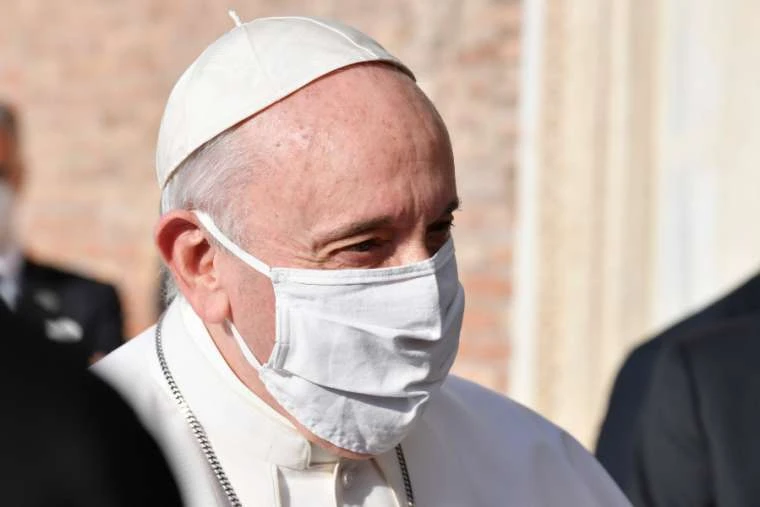 Pope Francis attends a Prayer Meeting for Peace in Rome’s Piazza del Campidoglio Oct. 20, 2020. / Vatican Media.
Vatican City, Jul 5, 2021 / 04:20 am (CNA).
Pope Francis is expected to spend the next week in hospital as he recovers from intestinal surgery, according to the Vatican.
“His Holiness Pope Francis is in good general condition, alert and breathing spontaneously,” Vatican spokesman Matteo Bruni told journalists on July 5.
The pope underwent a surgery at Rome’s Gemelli Hospital on July 4 to relieve stricture of the colon caused by diverticulitis.
The surgery lasted for about three hours and included a hemicolectomy, which is the removal of the left part of the colon.
The procedure was carried out under general anesthesia. Dr. Sergio Alfieri performed the surgery with the assistance of eight other physicians.
Colonic stricture, also called stenosis, is a condition in which part of the large intestine becomes narrower than usual. It can become dangerous if it is too narrow to let food safely pass through.
Diverticulitis, a common condition that involves the formation of small bulges or sacs on the wall of the colon, can cause the stricture.
Recovery from diverticulitis surgery typically includes a hospital stay of up to a week and at least another two weeks of limited activity.
As of July 5, there are no major events scheduled on Pope Francis’ public calendar for the upcoming weeks. The pope traditionally suspends his general audiences during July.
At the age of 84, Pope Francis has only had one other operation during his eight years as pope. He last underwent an operation in 2019, for cataracts.
Earlier this year, the pope was forced to miss several public events due to a recurrence of the sciatic pain that struck him at the end of 2020. Francis has suffered from the painful condition for several years.
After his personal physician died from the coronavirus in January, Pope Francis appointed internalist Roberto Bernabei as his doctor.
Bernabei is a specialist in aging and director of the School of Specialization in Geriatrics at the Catholic University of the Sacred Heart in Rome. He was present in the surgical suite during the pope’s intestinal surgery in Gemelli hospital.
The Catholic hospital and medical school has treated other popes and Catholic figures, including John Paul II after he was shot in an assassination attempt and Mother Teresa, who was treated in the clinic’s cardiology department.
The pope’s recent day of prayer for Lebanon confused more than a few people
Read MorePosted by bcadmin | Jul 5, 2021 | Associated Press, Church in the Middle East, Israel, Israeli-Palestinian Conflict, News, Palestine, Palestinian Christians, Palestinians |
Israel’s parliament is set to vote Monday on whether to renew a temporary law first enacted in 2003 that bars Arab citizens of Israel from extending citizenship or even residency to spouses from the occupied West Bank and Gaza.
Read MorePosted by bcadmin | Jul 5, 2021 | Catholic Church, Church in Asia, Church in India, Father Stan Swamy, India, lead, News |
An 84-year-old Jesuit priest who’s been imprisoned in India since October 2020 was reportedly placed on ventilator support in the hospital where he’s been since May.
Read More
Recent Comments