Select Page

Month: January 2020

Appeals court says Catholic university not obligated to allow unionizing

A Jan. 28 decision by the U.S. Court of Appeals in Washington reversed a 2017 ruling by the National Labor Relations Board ordering a Pittsburgh Catholic university to bargain with its adjunct faculty group.

Read More

Pope Benedict and the Angelic Doctor

BENEDICT XVI GENERAL AUDIENCE Saint Peter’s Square Wednesday, 2 June 2010 Saint Thomas Aquinas Dear Brothers and Sisters, After several Catecheses on the priesthood and on my latest Journeys, today we return to our main theme: meditation on some of the great thinkers of the Middle Ages. We recently looked at the great figure of[…]

The post Pope Benedict and the Angelic Doctor appeared first on Catholic Insight.

Read More

Pro-Life Lawlessness and Trumping Choice

Besides being the memorial – or, as I like to think of it, the feast – of Saint Thomas Aquinas, this is also the rather ambiguous anniversary, back on this day in 1988, of the striking down of Pierre Trudeau’s 1969 abortion law by the Supreme Court. The Court deemed the law ‘unconstitutional’, but not[…]

The post Pro-Life Lawlessness and Trumping Choice appeared first on Catholic Insight.

Read More

Trump and Netanyahu propose two-state plan for Israel-Palestine peace

Washington D.C., Jan 28, 2020 / 02:00 pm (CNA).- President Donald Trump and Israeli Prime Minister Benjamin Netanyahu proposed a new peace plan for the Middle East on Tuesday. The plan includes an independent Palestinian state with a capital in East Jerusalem. 

Trump said Jan. 28 that the plan offers a “win-win opportunity for both sides” and a “realistic two-state solution that resolves the risk of Palestinian statehood to Israel’s security.” 

“This is the first time Israel has authorized the release of a conceptual map, illustrating the territorial consequences it’s willing to make for the cause of peace,” said Trump. “And they’ve gone a long way. This is an unprecedented and highly significant development.” 

Netanyahu, who was in Washington on Tuesday for the unveiling of the plan, also used the term “realistic” when describing the proposal and said that it “strikes the right balance where others have failed.” 

Despite optimism from the two leaders, the proposal was not welcomed by the Palestinian Authority. President Mahmoud Abbas said in a statement on Tuesday evening that the proposal “will not pass.” Protests erupted in Gaza following the announcement of the plan.

Under the terms of the proposal, the Palestinian state would have a capital city called Al-Quds, the Arabic name for Jerusalem, which would include parts of East Jerusalem. Despite this, Trump insisted that Jerusalem would also remain “Israel’s undivided–very important–undivided capital.” The United States moved their embassy in Israel to Jerusalem in 2017. 

Under the plan, none of Jerusalem’s Old City or territory within the current security wall would be ceded to the  Palestinian state. The agreement also preserves the status quo policy regarding control of various religious sites, including the site of the Temple Mount and Al Aqsa Mosque, and, under the proposal, Muslims would still have access to the site. 

The plan also proposes the construction of a “West Bank-Gaza Tunnel” to connect the two halves of the new state, and that a third of the Gaza Strip be designated as a “high-tech manufacturing industrial zone.” 

Trump claimed Tuesday that the plan would “more than double Palestinian territory” without causing additional displacement for either Israelis or Palestinians. The plan includes provision for a “land freeze” over the next four years to maintain the borders of the proposed Palestinian state. 

As part of the plan, Trump also pledged $50 billion towards the Palestinian state for job creation and poverty reduction. Trump said that if Abbas and the Palestinian Authority “choose the path to peace,” that the United States and other countries “will be there, we will be there to help you in so many different ways.” 

After the announcement of the plan, Trump sent out a variety of tweets in English, Hebrew, and Arabic championing the proposal.

 “I will always stand with the State of Israel and the Jewish people. I strongly support their safety and security and their right to live in their historic homeland. It’s time for peace!” the president tweeted in English and Hebrew.

“This is what a future State of Palestine can look like, with a capital in parts of East Jerusalem,” Trump tweeted in Arabic and English. Both tweets included a map of the proposed two states. 

Parts of the proposed plan would seem to be in line with the Holy See’s stated preferences for a lasting peace in the Holy Land.

Monsignor Fredrik Hansen, chargé d’affaires of the Permanent Observer Mission of the Holy See, told the UN Security Council on Jan. 22 that Pope Francis continues to advocate for a two-state solution and a status quo policy in Jerusalem for shared religious sites. 

“Indeed, the appeal to maintain the status quo of the holy sites of Jerusalem, dear to Jews, Christians and Muslims in virtue of their religion and important for the cultural heritage of the whole human family, is one that has been repeatedly made,” said Hansen. 

Pope Francis, Hansen said, wishes for Jerusalem to live out “its vocation as a city of peace,” which can be a symbolic location of peace and encounter, with respect between religions and continued dialogue.

Read More

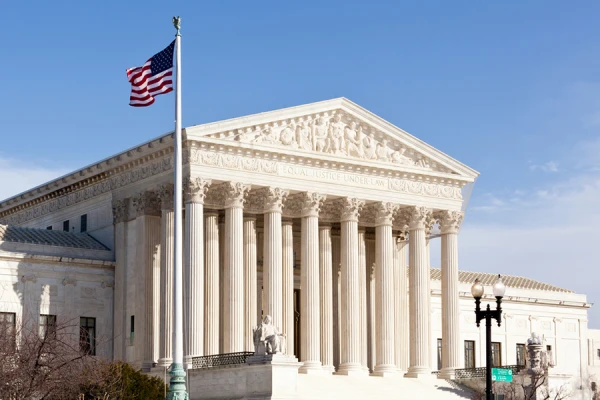
Supreme Court allows ‘public burden’ rule for migrants, but Catholic leaders object

Washington D.C., Jan 28, 2020 / 01:15 pm (CNA).- A Trump administration rule defining more low-income immigrants as a public burden may go into effect, the U.S. Supreme Court ruled this week. Catholic leaders decried the ruling, saying it will harm families’ ability to secure basic services and that it represents a radical departure from American traditions.

“We implore the administration to reconsider this harsh and unnecessary policy and rescind it in its entirety,” Sister Donna Markham O.P., president and CEO of Catholic Charities USA, said Jan. 27. “By allowing this harmful policy to go into effect, the administration imposes a chilling effect on access to basic services, creating fear among eligible individuals threatening family unity and stability.”

“We will be judged on how we treat the hungry, the homeless and the stranger among us and this decision signals a watershed change of course from the best moments of our American heritage of welcoming immigrants and refugees,” Markham said.

The rule change expands the criteria under which immigrants would be ineligible for a green card, encompassing those who use public benefits on a more temporary basis than the previous standards.

Catholic Charities USA said the rule harms families, targets legal immigrants, and could prevent families from securing basic nutrition and housing assistance.

The U.S. Supreme Court sided with the Trump administration in a 5-4 vote on Jan. 27 to overturn a nationwide injunction against the rule. The justices did not comment on the merits of the case. However, Justice Neil M. Gorsuch, joined by Justice Clarence Thomas, issued a concurring opinion objecting to the use of nationwide injunctions.

The decision means the new rule can go to effect in every state except for Illinois, a separate case. The rule will still face legal challenge in several courts across the country.

Immigrant advocates and several states had challenged the rule, saying it would impose costs on the states and penalize immigrants who rely on temporary government assistance. They objected that it limited access to green cards for low-income immigrants seeking legal entry to the U.S. or seeking to remain legally.

The concept of a “public charge” dates back to at least 1882, when federal lawmakers wanted to ensure that immigrants were independent and would not burden public services.

Since 1996, government regulations had defined a public charge as someone who is “primarily dependent” on government assistance, meaning this assistance supplies more than half their income through cash benefits, such as the Temporary Aid for Needy Families or Supplemental Security Income from Social Security, CNN reports.

Previously, fewer than 1% of applicants were disqualified on public charge grounds.

Under the Trump administration rules announced in August 2019, “noncash benefits providing for basic needs such as housing or food” count towards consideration of whether a person would be a public charge. These include most forms of Medicaid, food stamps and housing vouchers.

An immigrant who received one or more designated benefits for more than 12 months in a 36-month period could be designated a public charge. Use of two kinds of benefits in a single month would count as two months, the New York Times reports.

Lawyers for the private groups challenging the rule cited Department of Homeland Security estimates that the rule will cause hundreds of thousands of households to forgo benefits for which they are eligible “out of fear and confusion about the consequences for their immigration status of accepting such benefits.” The Department of Homeland Security warned of increased malnutrition, especially for pregnant or breastfeeding women and their infants and children; increased prevalence of communicable disease; and increased poverty and housing instability, the lawyers said in their brief.

New York Solicitor General Barbara D. Underwood, whose state was among the plaintiffs to the legal challenge, said the new rule would “radically disrupt over a century of settled immigration policy and public-benefits programs.” The established consensus was that the phrase “public charge” was limited to mean “individuals who are primarily dependent on the government for long-term subsistence,” she argued.

U.S. Solicitor General Noel J. Francisco, who defended the rule, asked the Supreme Court to lift the lower court injunctions. He argued that the new rule was a permissible interpretation of the concept “public charge.” It is a lawful goal to discourage immigrants seeking green cards from using public benefits, and enjoinment of the rule would cause “long-term harm” to the government, he said.

Francisco said if any resident aliens not subject to the rule disenroll from benefits for fear they would endanger their immigration status, then “such disenrollment is unwarranted, easily corrected and temporary.”

Susan Welber, a staff attorney at the Legal Aid Society, opposed the new policy. She told CNN the policy aimed to exclude “as unworthy and unwelcome anyone who is predicted to receive even a small amount of food, health or housing assistance at any point.”

“We are very disappointed in the Supreme Court’s decision, and the irreparable consequences it will have for immigrants and their families across the nation, but we continue to believe that our legal claims are very strong that we will ultimately prevail in stopping this rule permanently,” she said.

In September 2018, when the initial changes to the rule were proposed, the U.S. Conference of Catholic Bishops warned that the rule will be “very harmful to families” and cause fear among immigrant families who are “already struggling to fulfill the American Dream.” The proposed rule “further compounds strict eligibility guidelines already in place preventing many immigrants from receiving federal aid,” they said.


Read More

Recent Comments

    Categories