The Pilgrimage
I travell’d on, seeing the hill, where lay My expectation. A long it was and weary way. The gloomy cave…
The post The Pilgrimage appeared first on The Catholic Thing.
Read MoreSelect Page
I travell’d on, seeing the hill, where lay My expectation. A long it was and weary way. The gloomy cave…
The post The Pilgrimage appeared first on The Catholic Thing.
Read MorePosted by bcadmin | Sep 19, 2022 | Commentary, News |
The naked pressure tactics on display at the most recent gathering of the German ‘Synodal Path’ are completely alien to…
The post The German Problem appeared first on The Catholic Thing.
Read MorePosted by bcadmin | Sep 19, 2022 | Commentary, News |
In yesterday’s Gospel, Jesus gives a penetrating analysis of the state of the sinner and some very sobering advice to…
The post You cannot serve God and mammon appeared first on The Catholic Thing.
Read MorePosted by bcadmin | Sep 19, 2022 | 2022, Camino, Catholic Church, Catholicism, Charles Péguy, Columns, Jesus Christ, News, Portuguese and Spanish Camino, Purgatorio, Robert Royal, Royal's "On the Great Good Way", The Catholic Thing, via Portuguesa, Way of St. James |
I’ve been a pilgrim for the past two weeks in Portugal and Spain – and that place of prophetic miracle,…
The post On the Great Good Way appeared first on The Catholic Thing.
Read MoreGospel Verse, Mt 5:16: Let your light shine before others, that they may see your good deeds and glorify your heavenly Father.Little is known about St. Januarius. He was Bishop of Benevento in Campania. He died near Naples, about the year 305, martyred…
Read MorePosted by bcadmin | Sep 19, 2022 | Daily Verse, New Life in Christ, News, Scripture |
ENCOUNTERING THE WORD — YOUR DAILY BIBLE VERSES “As therefore you received Christ Jesus the Lord, so live in him, rooted and built up in him and established in the faith, just as you were taught, abounding in thanksgiving.” (Philippians 2:6-7) Print th…
Read MoreThe Haitian Conference of Religious (CHR) has called for effective government action to end the “unprecedented and random acts of violence” that have shaken the country.
The group challenged political leaders to take responsibility for res…
Pope Francis said that “it’s time to reset our course,” in his latest interview, with the Neapolitan newspaper Il Mattino.
The Pontiff said that mankind must change, adapting a new attitude toward life, in order to ward off environme…
The blood of St. Januarius liquefied on September 19, the saint’s feast day, in a ceremony at the cathedral in Naples.
The liquefaction of the blood of the 4th-century martyr is regarded as an omen by the people of Naples: a sign of assurance th…
Cardinal Konrad Krajewski, the papal almoner, escaped injury when gunmen fired at the vehicle he was using to distribute humanitarian aid in Ukraine on September 17.
Cardinal Krajewski, who is now the prefect of the Dicastery for the Service of Charit…
In a letter to the editor of the Wall Street Journal, criticizing an editorial in that paper, legal scholars Robert George and Josh Craddock argue that federal legislation to ban abortion would be allowable under the US Constitution.
The 14th Amendmen…
The trial of the 90-year-old former bishop of Hong Kong opens on September 19; targeted by Chinese authorities because of his activities in favor of democracy
Read More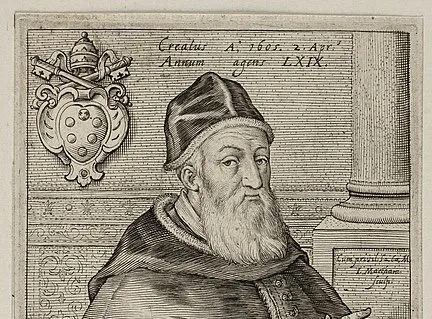
Denver Newsroom, Sep 18, 2022 / 14:00 pm (CNA).
Blessed John Paul I did not serve as Roman Pontiff for long, but 10 other popes had shorter pontificates than he did. Their stories are a microcosm of the history of the papacy. Some were friends of saints and worked for the good of the Church, while the qualifications of others might be a bit questionable. Through all these more or less flawed men who sat in the Chair of Peter, the Catholic Church teaches that the connection to St. Peter and his profession of faith in Christ endures.
Urban VII was pope for 13 days, Sept. 15–27, 1590.
He was born Giambattista Castagna at Rome, the home city of his mother. His father was of Genoan nobility. His uncle was a cardinal, whom he served at points during his long career in the Church. He held doctorates in civil and canon law.
Castagna worked in government and diplomacy on behalf of the papacy, which at the time held civil power over parts of Italy. He led several commissions during the Council of Trent and helped organize the military alliance against the Ottoman Empire, according to the New Catholic Encyclopedia. He was appointed archbishop in 1553 and became a cardinal in 1583.
He had a reputation for genuine piety, intelligence, and ability to govern.
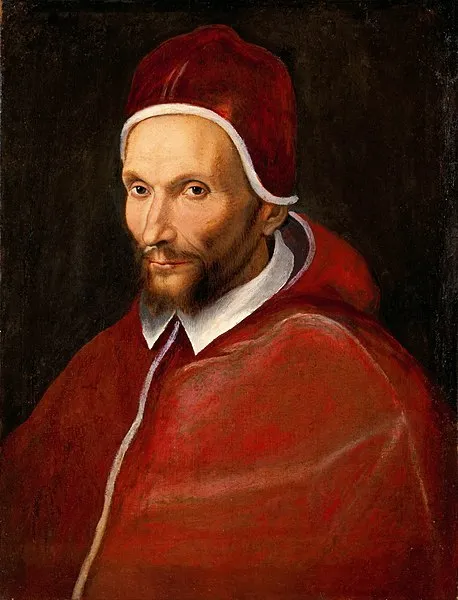
After his election as pope, he made sure to address the needs of the poor in Rome. His initial plans included expanded public works to employ the poor.
As God’s providence allowed, he did not have time to do much more than plan. He died of malaria at the age of 69. In his will, he left his personal fortune to support poor girls.
Celestine IV reigned for 15 days, Oct. 25–Nov. 10, 1241.
The future pope was born Goffredo da Castiglione in Milan. He spent time with the Cistercian religious order and was a cardinal bishop of Sabina. He was a nephew of Pope Urban III. He was already in poor health when he was elected, at a time when the papacy was a center of political conflict between backers and opponents of Holy Roman Emperor Frederick II.
Boniface VI reigned for 16 days, April 11–26, 896.
He was born in Rome. Not much is known about this pope, though records indicate that during his life he was canonically deprived of holy orders on two occasions: the first time as a subdeacon, and the second as a priest. His irregular past caused controversy over his election, the New Catholic Encyclopedia says.
Theodore II reigned for 20 days in December 897.
Another little-known pope, it is said that his clergy loved him, that he loved peace, and that he lived a life of chastity and charity to the poor. He came to power soon after a low point of the papacy. Pope Theodore annulled the acts of the “Cadaver Synod,” which had put on trial the corpse of his predecessor, Pope Formosus. He recovered the dead Roman Pontiff’s body from the River Tiber and gave it a proper burial. He also reinstated clergy who had been forced to resign.
Sisinnius was pope for 21 days, Jan. 15–Feb. 4, 708.
This pope was born in Syria. His health troubles included disabling arthritis, and he was unable to feed himself. The papacy was responsible for the military defense of Rome at this time, with Lombards invading from the north of Italy and Muslim armies advancing from the south. Sisinnius ordered the walls of Rome to be reinforced as his first act, the New Catholic Encyclopedia says. Before he died, Pope Sisinnius ordained one priest and consecrated a bishop for Corsica.
Marcellus II was pope for about 22 days in April and May, 1555.
He was born Marcello Cervini, at Montefano in Tuscany. Like the sainted Pope Marcellus of the fourth century, he kept his baptismal name as his papal name.
His father worked under several pontificates as a scribe and secretary.
Before Cervini was elected pope he served various roles as a secretary to popes and cardinals, including work to correct the Julian calendar. He was actively engaged with the “New Learning” of Renaissance humanism. He served as protector of the Vatican Library and helped improve and expand its collection. Cervini served the Vatican at the time of its response to the Protestant Reformation. He was a president at the Council of Trent, which continued through his short pontificate.
He gained a reputation as a Church reformer and had hoped to pursue this path during his papacy. He was not consecrated a bishop until the day after he was elected pope.
Pope Marcellus reputedly became sick from overwork during the celebrations of Holy Week and Easter, and the illness turned fatal.
The Missa Papae Marcelli of Giovanni Pierluigi da Palestrina was composed in his honor.
Damasus II reigned for 24 days in July and August, 1048.
This pontiff was named Poppo. He was born in Bavaria and was of German extraction. He served as Bishop of Brixen in Tyrol, in what is now western Austria.
Popes at the time could be nominated in an unusual manner. Pope Damasus II was named by Holy Roman Emperor Henry III. The pope, however, soon died of malaria.
Pius III was pope for 27 calendar days, Sept. 22–Oct. 18, 1503.
He was born Francesco Todeschini in Siena. He was the nephew of Pope Pius II, a famous Renaissance-era pope. His uncle took him into his household and became his patron, allowing the young man to add the pontiff’s family name Piccolomini to his own last name.
Francesco studied canon law. His uncle named him to become administrator of the Archdiocese of Siena and later made him a cardinal-deacon.
The future Roman Pontiff had a reputation of living an upright life as a cultured, gentle man, the New Catholic Encyclopedia reports. He took part in several conclaves of his time, including that which elected Alexander VI.
His service to the papacy included several diplomatic appointments to Germany, France, and Perugia.
Francesco’s own papal election took place amid ruling Italian families’ disputes over control of Rome and included an unsuccessful power play by the Borgia family.
Pius III was known to be in poor health. At the time of the papal coronation he was already suffering from a diseased leg, which developed into a septic ulcer. He died at the age of 64.
Leo XI was pope for 27 days, from April 1–27, 1605.
The Florentine-born Alessandro de Medici was a member of the famous Medici family. He was grand-nephew to Pope Leo X. He sought to become a priest from an early age, but because his mother objected he was not ordained until after she died, according to the New Catholic Encyclopedia. He served as an ambassador to Rome on behalf of Tuscany, before he began to advance in the Church. He would eventually become a bishop, then archbishop of Florence, before being named a cardinal.
He served as a papal legate to France and was head of the Congregation of Bishops.
Among his great friends was St. Philip Neri, founder of the Oratorians.
He was elected pope at the age of 69 and became sick almost immediately.
Benedict V served as pope for 33 days, May 22–June 23, 964.
He was born in Rome and had a reputation for great learning.
He reigned at a time of great turmoil in the Church. Holy Roman Emperor Otto I had interfered with the pontificates of his predecessors. The emperor had forcibly deposed a pope and installed his own nominee on the See of Peter. There were rival claimants to the papacy under Benedict V and Otto again interfered, laying siege to Rome and taking the pope away from Rome by force. Benedict either renounced the papacy or was forcibly deposed. He lived in exile in Hamburg for another year.
John Paul I served as Roman Pontiff from Aug. 26–Sept. 28, 1978, 33 calendar days.
His beatification on Sept. 4 renewed attention to his life. He had a reputation for humility and for teaching the faith in an understandable way.
The future John Paul I took part in the Second Vatican Council and was named patriarch of Venice.
As a cardinal, Luciani published a collection of “open letters” to historic figures, saints, famous writers, and fictional characters. The book, “Illustrissimi,” included letters to Jesus, King David, Mark Twain, Charles Dickens, and Christopher Marlowe, as well as Pinocchio and Figaro, the barber of Seville.
He was the first pope to have two names. He took his papal name from his immediate predecessors, Sts. John XXIII and Paul VI.
Read MorePosted by bcadmin | Sep 18, 2022 | Middle East - Africa, News |
Displaced people fleeing the war in Cameroon / Public Domain
Washington, D.C. Newsroom, Sep 18, 2022 / 13:10 pm (CNA).
Gunmen set a Catholic church on fire and kidnapped five priests, one religious sister and two lay people in western Cameroon,…
William Cash pays respect to the Queen and encounters the Catholic Ghosts of Westminster Hall ‘File into two lines, gently now’ was the command we were given by a tail-coated official as us pilgrim mourners entered a strangely silent Westminster Hall to pay our final respects, and offer prayers, to Her Majesty the Queen. The
The post Lying in state appeared first on Catholic Herald.
Read More
Our Lady of Lebanon Maronite Catholic Church in Toronto replaced a vandalized statue of Mary with a replica of the Lebanese shrine Our Lady of Lebanon in Harissa on Sept. 11. / Photo credit: Our Lady of Lebanon Maronite Catholic Church
Boston, …
Read MorePosted by bcadmin | Sep 18, 2022 | Feature2, Feature3, News, Vatican City |
To participate, it is necessary to follow the Competition Regulations, which describe the specifications: for liturgical purposes, the possibility of being performed by a schola cantorum, as well as by a church assembly.
The post International competition for the composition of the Jubilee Hymn appeared first on ZENIT – English.
Read More
Recent Comments