Cardinal Pell Highlights ‘Somewhat Incomplete’ Account Given by Cardinal Becciu at Vatican Finance Trial
cna
Read MoreSelect Page
Sen. Steve Daines (R-MT), the founder and chair of the Senate Pro-Life Caucus, speaks with CNA on May 5, 2022. / Katie Yoder/CNA
Washington D.C., May 6, 2022 / 15:56 pm (CNA).
If the Supreme Court overturns Roe v. Wade, the case that legalized …
Cardinal George Pell, prefect emeritus of the Secretariat of the Economy, speaks with EWTN News in Rome, Dec. 9, 2020. Credit: Daniel Ibáñez/CNA.
Denver Newsroom, May 6, 2022 / 15:40 pm (CNA).
Cardinal George Pell said Friday that the recent te…
Rep. Chris Smith. Public Domain. / null
Washington, D.C. Newsroom, May 6, 2022 / 15:24 pm (CNA).
U.S. Rep. Chris Smith said Thursday that overturning the landmark 1973 Supreme Court decision Roe v. Wade that legalized abortion nationwide would …
Posted by bcadmin | May 6, 2022 | Bishop Williams, Mary Williams, Mother!, Mother's Day, News, Practicing Catholic |
“If there is such a thing as a charism of motherhood, my mom has that,” said Bishop Joseph Williams, auxiliary bishop of the Archdiocese of St. Paul and Minneapolis. A mother of nine, “she makes it look effortless and she’s joyful in it, and it’s such a gift,” he said.
Read More
null / chrisweger (CC BY-SA 2.0) | Daniel Ibáñez / ACI Prensa
Lima, Peru, May 6, 2022 / 15:00 pm (CNA).
In a Tweet on Wednesday, Madonna asked Pope Francis to receive her so she could talk with him about “some important matters”.“Hello @Pontife…
Posted by bcadmin | May 6, 2022 | Catholic educators, Featured, Latino, Latino families, Local News, News, Twin Cities Latino Enrollment Institute, U.S. Catholic schools |
Thirty-five percent of all practicing Catholics in the U.S. are Latino, and since 1960, 70% of the growth in the U.S. Catholic Church has come from Latino families. At 62.1 million, Latinos represent the largest — and youngest — ethnic minority population in the U.S. One of every two children in the U.S. is Latino.
Read MorePosted by bcadmin | May 6, 2022 | Catholic news, Dobbs v. Jackson Women’s Health Organization, News, News Briefs, prolife, SCOTUS |
Denver Newsroom, May 6, 2022 / 14:05 pm A leaked Supreme Court draft that could overturn pro-abortion rights precedents in the U.S. drew praise from critics who say the current precedent was built on deeply […]
Read MorePosted by bcadmin | May 6, 2022 | Abortion, Dobbs, Local News, News, Protests, Roe v. Wade, SCOTUS, Supreme Court |
Parishes in the Archdiocese of St. Paul and Minneapolis and around the country are preparing for potential protests at Masses this weekend, after a national abortion advocacy group called on supporters to disrupt Catholic liturgies. In a May 5 email to parish leaders, the archdiocese’s Office of Communications alerted parishes of the possibility and shared […]
Read More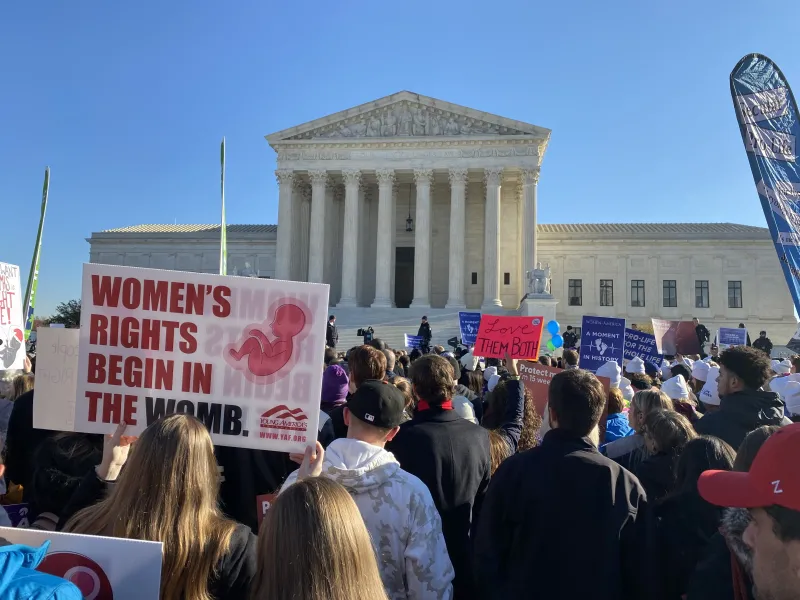
Denver Newsroom, May 6, 2022 / 14:05 pm (CNA).
A leaked Supreme Court draft that could overturn pro-abortion rights precedents in the U.S. drew praise from critics who say the current precedent was built on deeply flawed legal and factual claims.
“If in fact it represents a majority opinion it is a great day for women and children,” Teresa Collett, a law professor at the University of St. Thomas School of Law in Minneapolis told CNA May 3. “It is, however, just the opening of a new phase of what must be a vigorous state by state effort to protect women and their unborn children from the abortion industry.”
The U.S. Supreme Court is set to rule on Dobbs v. Jackson Women’s Health Organization, the highly charged Mississippi case viewed as a decisive test of Roe and the legal reasoning that has sustained it as the law of the land for the past 49 years.
A draft decision in the case was leaked on Monday. The U.S. Supreme Court stressed that the document “does not represent a decision by the Court or the final position of any member on the issues in the case.” But the draft shows some insight into both the thought of author Justice Samuel Alito and how the court might overturn the pro-abortion decisions Roe v. Wade and Planned Parenthood v. Casey, which together have barred states from restricting or banning most abortions, and mandated legal abortion nationwide.
Roe prohibited states from banning abortion prior to fetal viability, or the capacity of the fetus to survive outside the woman’s body (now considered to be at approximately 24 weeks gestation), while Casey modified this precedent and barred states from adopting regulations that pose an “undue burden” for a woman exercising her legal right to obtain an abortion.
These precedents could fall, and the Dobbs draft has prompted much analysis and discussion.
“The draft confirms what many U.S. Supreme Court justices have been saying for decades: that Roe v. Wade created a ‘fundamental right’ to abortion out of thin air, with no textual, legal or historical support for it,” said Ligia Castaldi, a law professor at Ave Maria School of Law in Naples, Florida.
“It says that there is no explicit or implicit constitutional right to abortion in the constitution, and that a proper interpretation of the right to privacy does not lead to the creation of a right to abortion either,” she told CNA.
The draft decision itself had to wrestle with precedent and principles like “stare decisis,” a Latin phrase that roughly means “to stand by things that have been decided.” This principle generally binds the Supreme Court to its own precedent.
Alito said that the Supreme Court has long recognized that stare decisis is “not an inexorable command” and this principle is “at its weakest” when the highest court is interpreting the U.S. Constitution.
“Roe was on a collision course with the U.S. Constitution from the day it was decided, and Casey perpetuated its errors, and the errors do not concern some arcane corner of the law of little importance to the American people,” the draft said.
Alito’s draft said the court has “previously overruled decisions that wrongly removed an issue from the people and the democratic process.” He cited the 1937 West Coast Hotel v. Parrish decision, which upheld state minimum wage laws in contradiction to Supreme Court precedents of the time that were hostile to workers.
“…when one of our constitutional decisions goes astray, the country is usually stuck with the bad decision unless we correct our own mistake,” the draft added. “An erroneous constitutional decision can be fixed by amending the Constitution, but our Constitution is notoriously hard to amend.”
“Some of our most important constitutional decisions have overruled prior precedents,” said Alito, citing the Brown v. Board of Education decision which ended racial segregation in schools. The pro-racial segregation Plessy v. Ferguson decision, he said, “betrayed our commitment to equality under law.”
The Roe decision relied on an “erroneous understanding” of the history of abortion laws in the U.S., including reliance on “two discredited articles by an abortion advocate.” This misunderstanding “appears to have played an important part in the Court’s thinking,” Alito said.
Supporters and critics of current abortion precedents, in arguments and briefs before the Supreme Court, gave very different interpretations of that principle. Backers of the legal decisions supporting legal abortion tried to depict them as “precedent on top of precedent.”
Castaldi told CNA last year that the Supreme Court has already “chipped away” at its precedent in Roe. Casey affirmed a right to abortion based on personal liberty, rather than Roe’s privacy finding. It also dispensed with Roe’s trimester-based system for evaluating state abortion laws.
Such developments were a departure from precedent at the time and allow grounds for further change: the court can either further undermine or abolish Roe.
In response to the draft Dobbs opinion, Castaldi echoed Alito by citing previous court decisions that were overturned.
“Yes, the court has abolished wrongfully decided judgments before, such as Plessy v. Ferguson, upholding segregation statutes, and Korematsu v. United States, upholding internment of people of Japanese ancestry in concentration camps during World War II, to name a few,” she said.
“The draft similarly finds that Roe was ‘egregiously wrong from the start’ and holds that ‘Roe v. Wade must be overruled.’ It indicates that stare decisis, the judicial tradition of following precedent, has not historically bound the court to follow erroneously decided judgments, especially when the said decision was poorly reasoned, did not create workable rules, had disruptive effects on other areas of the law and failed to rely on proper constitutional interpretation, as Roe did,” Castaldi explained.
Alito’s draft argued that the Casey decision “deployed a novel version of the doctrine of stare decisis” that “did not account for the profound wrongness of the decision in Roe, and placed great weight on an intangible form of reliance with little if any basis in prior case law.”
Reliance, or reliance interests, are a legal concept that generally aims to protect those who have made a past decision.
“Typically, reliance refers to property, as in a case where a city changes an industrial area to a residential area,” Collett told CNA. A city can’t order someone who has built an industrial plant in that area to shut it down because of the changed status.
Collett was the lead counsel for an amicus brief of 240 women scholars and professionals and pro-life feminist organizations. In contrast to backers of legal abortion who claim current pro-abortion rights precedent is necessary for women’s progress, this brief argues that the precedent disadvantages women.
“Of course, it is our clients’ position that there is no reliance that you can consistently show,” she explained. “Abortion, as the court recognized in the Casey opinion, is a response to an unplanned pregnancy. And therefore it is a prospective act, that evidences virtually no reliance.”
Collett told CNA that both the brief she co-authored and opposing briefs are cited in Alito’s draft “to establish that we simply do not know if such reliance occurred.”
Legal abortion backers have argued that the court must uphold abortion rights precedent to ensure women’s progress.
Alito said that the Casey decision had already rejected the contention that abortion precedent involves traditional reliance interests. In his view, that decision then tried to present women’s relationship choices and choices about their roles in society as a form of reliance interests. Alito said the Supreme Court is “ill-equipped” to evaluate these assertions. The evaluation of the social and individual effects of a right to abortion is best left to state legislatures and other political processes in which, the justice noted, women have a prominent role.
“Our decision returns the issue of abortion to those legislative bodies, and it allows women on both sides of the abortion issue to seek to affect the legislative process by influencing public opinion, lobbying legislators, voting, and running for office. Women are not without electoral or political power,” he said.
While some have said the draft decision calls into question the Obergefell decision, which mandated recognition of same-sex unions as legal marriages nationwide, Collett was sceptical.
“This is a very different situation than the question of whether the court would overrule a case like Obergefell, which redefined marriage across the nation, where people have taken actions that are irrevocable, in getting married.”
Though the draft Dobbs decision does not make an explicit ruling about the right to life, Castaldi nonetheless praised the prospect of it becoming a new precedent for American law.
“If a majority of the Supreme Court confirms this decision and passes a final draft with similar reasoning, the Dobbs decision will be a landmark judgment in world history, marking the beginning of an era of greater respect for the unborn child’s human rights, which our Church has been promoting for millennia,” she said.
As the court makes its decision, Castaldi said, “we can pray that they act decisively, and that they do so sooner rather than later.”
Read MorePosted by bcadmin | May 6, 2022 | Algorithms, Child predators, Inside the Capitol, News, Protecting children from Big Tech, Social media, Social media algorithms |
Social media use has increased tremendously over the last decade, especially among younger users. Much chatter has erupted around the country over the damaging content social media algorithms feed to children, and how said algorithms ought to be controlled.
Read More
Elisa Pires via JMJ Rio 2013/Flickr (CC BY-NC-SA 2.0).
Denver Newsroom, May 6, 2022 / 13:13 pm (CNA).
Father Doug Grandon is a Catholic priest today, but spent the first half of his life as a Protestant. As an Anglican priest, he began to wonde…
Catholic League Forum is a weekly Q&A discussion between Catholic League president Bill Donohue and director of communications Mike McDonald on contemporary issues of interest to the Catholic community. This week, Bill and Mike discuss the lies of …
Read MorePosted by bcadmin | May 6, 2022 | Featured, Kremlin, Moscow, News, Pope Francis, U.S. & World News, Ukraine, Vladimir Putin |
Pope Francis’ secretary of state reaffirmed the pope’s offer to go to Moscow personally to try to convince President Vladimir Putin to stop his war on Ukraine but said the Kremlin had yet to respond.
Read MorePosted by bcadmin | May 6, 2022 | Mary, News, Synod Watch |

Interview with Larissa Porzelt, from Germany, who is a student of theology at Hochschule Heiligenkreuz in Austria. Note: “Maria” is the German name for Mary. You are involved in Maria 1.0. But first, what is Maria 2.0? Maria 2.0 is […]
The post The True Mary: German Catholic Women Fight Against Feminism appeared first on OnePeterFive.
Read More
Recent Comments