How Catholics can heal divisions
So many of our problems that we face in our country today are much more difficult. Politics is downstream from…
The post How Catholics can heal divisions appeared first on The Catholic Thing.
Read MoreSelect Page
Posted by bcadmin | Jan 18, 2021 | Commentary, News |
So many of our problems that we face in our country today are much more difficult. Politics is downstream from…
The post How Catholics can heal divisions appeared first on The Catholic Thing.
Read MorePosted by bcadmin | Jan 18, 2021 | In the News, News |
The March for Life Education and Defense Fund, the organization behind the annual March for Life in Washington, D.C., said…
The post 2021 March for Life will be virtual appeared first on The Catholic Thing.
Read MorePosted by bcadmin | Jan 18, 2021 | Commentary, News |
Samuel was surely one of the most significant prophets of the Old Testament and lived at a critical time, as…
The post Picture of a prophet appeared first on The Catholic Thing.
Read MorePosted by bcadmin | Jan 18, 2021 | In the News, News |
Conservative scholars argued this week that Xavier Becerra, president-elect Joe Biden’s pick for HHS secretary, has a history of “hostility…
The post HHS pick hostile to religious non-profits appeared first on The Catholic Thing.
Read MoreAccording to the 1962 Missal of St. John XXIII the Extraordinary Form of the Roman Rite, today is the feast of St. Peter’s Chair at Rome and the commemoration of St. Prisca, virgin and martyr. The Feast of the Chair of St. Peter in the Ordinary Form of…
Read MorePope Francis has appointed Bishop Fabio Fabene, and Italian cleric who has served more than 20 years in various Vatican posts, as Secretary of the Congregation for the Causes of Saints. Bishop Fabene—who has worked most recently as undersecretary…
Read MoreFacebook has removed commentary by Cardinal Juan Sandoval Iniguez, the former Archbishop of Guadalajara, in which the elderly prelate says that the Covid epidemic has provided a pretext for the imposition of a new world order. “This pandemic won&…
Read MoreArchbishop Philip Wilson, whose conviction in 2018 on charges of concealing clerical abuse was later overturned on appeal, died on January 18 at the age of 70. Church spokesmen said that the prelate’s death was unexpected, although he had faced s…
Read MoreRaffaele Mincione, an Italian involved in the London financial deal that has ignited a scandal at the Vatican, has sued the daily La Reppublica for libel. Mincione, who insists that his part of the real-estate transaction was legitimate, has already f…
Read MoreArchbishop José Luis Escobar Alas of San Salvador has said that the peace accords signed in 1992 to end the country’s long civil war should not be celebrated, since the conditions of the peace agreement have not been fulfilled. The archbisho…
Read MoreThe Vatican has withdrawn a request for the extradition of Ceclia Marogna, an Italian woman who was arrested last October in connection with Vatican financial scandals. Marogna— who received large sums from the Secretariat of State— still faces a Vati…
Read MoreA Nigerian priest and his brother were kidnapped and murdered in central Nigeria on January 15. Father john Gbakaan and his brother were ambushed as they traveled to visit their mother. The kidnappers had presented the Diocese of Minna with a ransom de…
Read More
Victoria, Canada, Jan 17, 2021 / 05:00 pm (CNA).- When Father Harrison Ayre looks back on 2020 and the start of the coronavirus pandemic, the phrase that immediately comes to his mind is ‘dazed and confused.’
“I look back and I think to myself, ‘Oh, I could have put [that] more pastorally here and there,’” Fr. Ayre said. “But I’m also quite forgiving of myself in that regard because I think we were just all dazed and confused and no one knew what to do, because virtually everyone has no experience with a worldwide pandemic to base this off of.”
Fr. Ayre is a priest of the Diocese of Victoria in Canada, and co-host of the podcast ‘Clerically Speaking.’ His diocese initially suspended public Masses in March of 2020, due to the coronavirus pandemic.
Despite the early days of lockdown being a challenging and scary time in so many ways, Father Harrison remembers something else that happened during that time.
“For me personally, it was actually a time of great spiritual renewal,” he said. “My prayer life was never as good as it was in those three months of kind of initial lockdowns and closures. It was a really a time of intimacy with the Lord, and praying – really interceding for the Church.”
A big part of that spiritual renewal involved the Bible.
“The Bible is not just a historical document that tells us about the past, but rather it’s something living. God is speaking to the Church today through the events of scripture. Scripture is always pumping, alive.”
The situation of global lockdown caused Fr. Ayre to read certain Bible passages with fresh eyes. For example, the story of Israel’s exile to Babylon, in the Old Testament.
“They lost the temple, they lost the kingship, they lost their land…Everything that made them, the Jewish people, the chosen people of God, was removed from them,” he said.
“And in that process of that absence from everything, they actually came to a deeper appreciation of who God was and it purified them…It helped them see that God is not just the God of our land. This is the God of the universe. This is the true King. And they came back with a renewed energy and a renewed life into their vocation to be the light to the world.”
Fr. Ayre said the Church is a new Israel, and we can look at the events of Israel to help us try to understand what is happening in the Church today.
“This is not new in the history of God’s working with his people. He does this with Israel,” he said. “This has happened in history before too in the Church, with other plagues and churches closed down. This is not a unique moment. This is how God often acts to bring us to an even deeper vigor.”
“There’s a deep hope here for renewal, for the Church, if we can open our hearts to listen.”
Fr. Ayre’s experience of spiritual renewal is something he hopes to share with the world through a new book – “Finding Christ in the Crisis: What the Pandemic Can Teach Us.” He co-wrote the book with Michael Heinlein, his editor at the Our Sunday Visitor publication Simply Catholic.
Fr. Ayre said the book was inspired by conversations he and Michael had during the initial lockdowns.
“We were just noticing … reactionism to a lot of things that were happening, instead of quiet receptivity,” Fr. Ayre said. “Sometimes there were perhaps some unhealthy attitudes manifesting itself. That’s not always a bad thing, per se. It’s not a judgment, it’s just a revelation.”
As the two talked more and more about it, they decided to create a series of articles that could publish on the Simply Catholic website. But Fr. Ayre said it didn’t seem like it was enough.
“As we kind of talked about more and more, we said, ‘no, this needs to be like a resource that you can hand out to people.’ We just want this to be a tool to help build hope and to build up the three theological virtues of faith, hope and love.”
“Finding Christ in the Crisis” was published in the fall of 2020. The book was written in the midst of the coronavirus pandemic, but Fr. Ayre hopes it can serve as a resource for Catholics navigating other crises in the life of the Church.
“The Church is not immune to crises,” he said. “And so we just hope and pray that this is asking that big question, ‘where is Christ in this?’”
Fr. Ayre emphasized that we can be realistic about the difficulties of this time, while still maintaining the virtue of Christian hope.
“I think there is a balance there… But when we do feel down or alone or discouraged – that those feelings won’t go away, per se, but the Christian faith says that this is where the cross is at work,” he said. “Often that’s the place where Christ actually might be showing his closeness to us.”
“But the cross is still a cross. When we say that the cross is really the source of hope as a Christian, it doesn’t remove the pain of the cross. It just inserts God’s presence into that pain.”
“When we’re feeling discouraged alone, angry…It only becomes a problem when we don’t do that rooted in Christian hope, which is not wishful thinking. But rather to say, I recognize the presence of Christ here. When I’m discouraged, Christ is suffering that with me because he has taken on our humanity to suffer this with me. When I’m feeling alone, the Lord is alone with me, so that I’m actually really not alone.”
“Finding Christ in the Crisis” is available on Amazon and Our Sunday Visitor.
This interview originally aired on Catholic News Agency’s podcast, CNA Newsroom. It has been adapted for print. Listen to the interview below, beginning at 3:30.
CNA Newsroom · Ep. 89: Taking Back the Year
Posted by bcadmin | Jan 17, 2021 | News, Nota in Brevis |
MPP Roman Baber has written a public letter to Premier Doug Ford, requesting an end to the draconian lockdown measures, claiming, quite reasonably, that that they are inflicting – and will continue do – far more harm, than any good. His evidence seems clear and he writes respectfully, that almost all the deaths are in[…]
The post Baber the Brave vs. Ford the Obtuse appeared first on Catholic Insight.
Read MoreCNA Staff, Jan 17, 2021 / 09:00 am (CNA).- Archbishop Georg Gänswein said on Sunday that the image known as the Holy Face of Manoppello conveys the “incomparable news” of Christ’s resurrection.
The Prefect of the Papal Household…
Read MorePosted by bcadmin | Jan 17, 2021 | Catholic Church, Catholic News Service, Church in the Americas, El Salvador, murdered priest, News |
Just weeks before his killing, Father Ricardo Cortez had written to the U.S. Conference of Catholic Bishops requesting economic help for his beloved seminary, damaged by tropical storms that barreled through Central America in 2020 and struggling from the economic effects of COVID-19.
Read More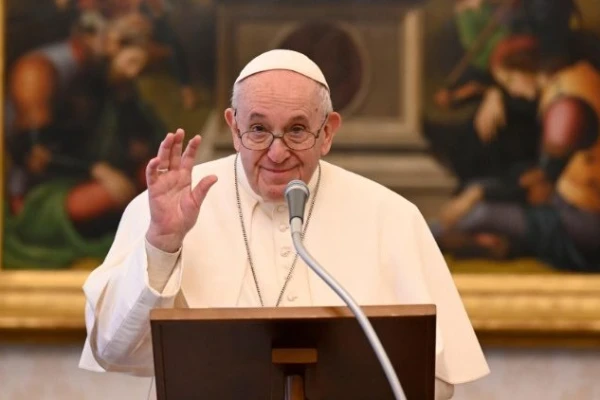
Vatican City, Jan 17, 2021 / 06:00 am (CNA).- Pope Francis said Sunday that great joy is found when one offers his life in service to God’s call.
“There are different ways of carrying out the plan that God has for each of us, which is always a plan of love. … And the greatest joy for every believer is to respond to this call, to offer all of himself at the service of God and his brothers and sisters,” Pope Francis said in his Angelus address Jan. 17.
Speaking from the library of the Vatican’s Apostolic Palace, the pope said that each time that God calls someone it is “an initiative of His love.”
“God calls to life, He calls to faith, and He calls to a particular state in life,” he said.
“God’s first call is to life, through which He makes us persons; it is an individual call because God does not make things in sets. Then God calls us to faith and to become part of His family as children of God. Lastly, God calls us to a particular state in life: to give of ourselves on the path of marriage, or that of the priesthood or the consecrated life.”
In the live video broadcast, the pope offered a reflection on Jesus’ first encounter and call of his disciples Andrew and Simon Peter in the Gospel of John.
“The two follow Him and remained that afternoon with Him. It is not difficult to imagine them seated asking Him questions and above all listening to Him, feeling their hearts inflamed ever more while the Master spoke,” he said.
“They sense the beauty of the words that respond to their greatest hope. And all of a sudden they discover that, even though it is evening, … that light that only God can give burst within them. … When they leave and return to their brothers, that joy, this light overflows from their hearts like a raging river. One of the two, Andrew, tells his brother Simon – whom Jesus will call Peter when he meets him: ‘We have found the Messiah.’”
Pope Francis said that God’s call is always love and should always be responded to only with love.
“Brothers and sisters, faced with the call of the Lord, which can reach us in a thousand ways even through people, happy or sad events, sometimes our attitude can be one of rejection: ‘No, I’m afraid” — rejection because it seems contrary to our aspirations; and also fear, because we consider it too demanding and uncomfortable: ‘Oh I won’t make it, better not, better a more peaceful life… God there, I am here.’ But God’s call is love, we must try to find the love that is behind every call, and respond to it only with love,” he said.
“At the beginning there is an encounter, or rather, there is ‘the encounter’ with Jesus who speaks to us of His Father, He makes His love known to us. And then the desire to communicate it to the people we love will spontaneously arise within us too: ‘I met Love.’ ‘I met the Messiah.’ ‘I met God.’ ‘I met Jesus.’ ‘I found the meaning of life.’ In a word: ‘I found God.’”
The pope invited each person to remember the moment in his life in which “God made himself present more strongly, with a call.”
At the end of his Angelus address, Pope Francis expressed his closeness to the people of the island of Sulawesi, Indonesia, which was hit by a strong earthquake on Jan. 15.
“I pray for the dead, for the wounded and for those who have lost their homes and jobs. May the Lord comfort them and support the efforts of those who are committed to helping,” the pope said.
Pope Francis also recalled that the “Week of Prayer for Christian Unity” will begin Jan. 18. This year’s theme is “Remain in my love and you will bear much fruit.”
“In these days, let us pray together so that Jesus’ desire may be fulfilled: ‘That all may be one.’ Unity is always superior to conflict,” he said.
Recent Comments