Select Page

Month: May 2020

Catholic Schools and the Common Good

Stephen P. White: In most non-Catholic schools the natural order is rejected in the name of utility, while the meaning of Creation is erased.

The post Catholic Schools and the Common Good appeared first on The Catholic Thing.

Read More

Thursday of the Seventh Week of Easter

We all come in different shapes and sizes, with different gifts and talents. Yet, in spite of our differences, God’s plan for us is to be united with Him and in Him, with each other. Jesus brings about this unity through his Body, the Church. When we cooperate with God’s grace, we are allowing the […]

Read More

Blessed Margaret Plantagenet Pole

Margaret Plantagenet, daughter of the Duke of Clarence and niece of King Edward IV and Richard III of England, was born in 1471 at Farley Castle near Bath, England. When she was about 20 years old, she married Sir Richard Pole and bore him five children. When Henry VIII became king, she was widowed and […]

Read More

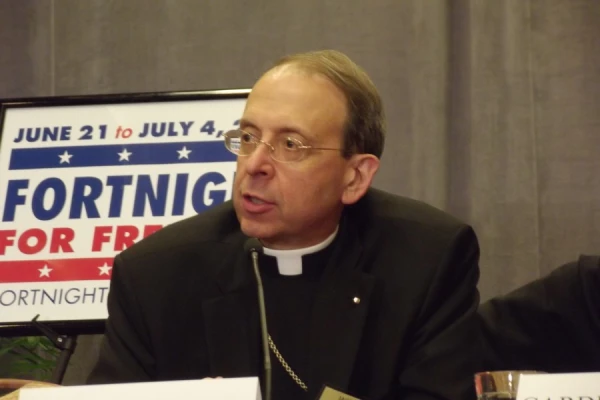
Baltimore archdiocese has ‘serious concerns’ about county Communion ban

Washington, D.C. Newsroom, May 27, 2020 / 06:02 pm (CNA).- The Archdiocese of Baltimore said it has “serious concerns” about public health guidance from Howard County, Maryland, which prohibits the reception of Communion as a condition for churches to reopen during the coronavirus pandemic.

“For the Catholic community, the reception of Communion is central to our faith lives and to our public worship,” said a statement from the archdiocese, released to CNA on Wednesday.

“Since learning of the concerns of Howard County officials, we have shared our guidelines for the distribution of Communion and express our own serious concerns about their recent guidance preventing Catholic churches in Howard County from distributing Communion.”

Howard County’s Executive Order #2020-09, published on May 26, outlines the conditions and regulations that must be met for non-essential businesses–which in Maryland includes churches and other houses of worship–to resume operations. The order was released by Howard County Executive Calvin Ball.

The order provides that “there shall be no consumption of food or beverage of any kind before, during, or after religious services, including food or beverage that would typically be consumed as part of a religious service.”

Since the consumption of the consecrated species at Mass, at least by the celebrant, is an integral part of the Eucharistic rite, the order effectively bans the licit celebration of Mass in the county.

The executive order was reported by CNA May 27. 

The archdiocese said it is committed to ensuring churches reopen safely after closure amid the coronavirus pandemic. 

The archdiocese has “developed thorough and carefully thought-out guidelines for resuming public Masses, including detailed guidance on the safe distribution of Communion.”

“These guidelines respect both the sanctity of the Sacrament and the need for abundant caution to protect the health and safety of both those receiving and distributing Communion,” the archdiocese said.

“While we recognize and value the urgent desire to guard the health and safety of local communities that is guiding the decisions of our government leaders, we are committed to engaging in dialogue with them to work together towards a policy going that balances the need for free expression of religious faith and the public’s health and safety interests.”

Baltimore’s Archbishop William Lori is well known for his advocacy on religious liberty issues, and was the inaugural and longtime chair of the U.S bishops’ conference ad hoc committee on religious freedom. 

Earlier on Wednesday, Howard County spokesman Scott Peterson told CNA that “Howard County has not fully implemented Phase 1 of Reopening. We continue to do an incremental rollout based on health and safety guidelines, analysis of data and metrics specific to Howard County and in consultation with our local Health Department.”

“With this said,” Peterson added, “we continue to get stakeholder feedback in order to fully reopen to Phase 1.” 

“Regarding religious services,” Peterson said, “we have allowed for outdoor services. However, public health officials continue to describe the ongoing risks associated with hand-shaking, singing, and consumption of food of any kind thereby continuing the need for restrictions on these types of activities out of an abundance of safety precautions to protect the health, safety and well-being of the community.”

The executive order limits attendance at indoor worship spaces to 10 people or fewer, while allowing outdoor services for up to 250 socially-distanced people wearing masks – though the prohibition of food or drink, including Communion, is not limited to indoor celebrations.

The archdiocese announced its own phased reopening plans on Tuesday. While some of the policies outlined in the archdiocese’s plans are in line with Executive Order 2020-09, there is no prohibition on the reception of Communion before, after, or during Mass. 

The Archdiocese of Baltimore’s reopening plans require that communicants observe social distancing while in line for communion, and is discouraging reception on the tongue–but the archdiocese has not instructed parishes to place any other restrictions on the reception of communion, apart from ordinary canonical norms.

In Phase I of the archdiocese’s reopening plan, churches will be open for private prayer, but Mass will still be celebrated without a congregation. In Phase II, which is expected to begin in some areas the weekend of May 30-31, churches may open to socially-distanced congregations up to one-third of the seating capacity, if local public restrictions permit the attendance of more than 10 people at Mass.

Read More

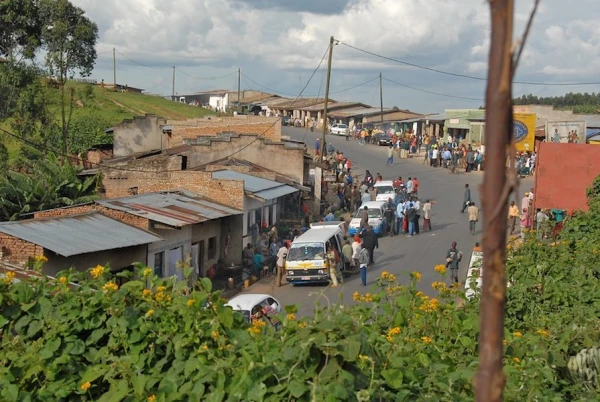
Burundi bishops denounce suspect presidential election

CNA Staff, May 27, 2020 / 06:00 pm (CNA).- The Catholic bishops of Burundi have denounced the country’s recent general elections, and alleged irregularities in the voting process earlier this month.

The president of the Burundi Conference of Catholic Bishops (BCCB) issued a statement on Tuesday following the victory of Evariste Ndayishimiye, former secretary-general of the country’s ruling party, the CNDD-FDD.

“We deplore many irregularities with regard to the freedom and transparency of the electoral process as well as fairness in the treatment of certain candidates and voters,” said Bishop Joachim Ntahondereye of Muyinga after results were announced, according to AFP.

On Monday, the electoral commission declared Ndayishimiye the winner of the country’s May 20 election. He received 68.72% of the votes, more than double the opposition’s leader, Agathon Rwasa, who received 24.19%.

The opposing party, the National Council for Liberty (CNL), called the process “an electoral masquerade” and promised to appeal to the Constitutional Court this week. If the opposition’s appeal is rejected, Ndayishimiye will be sworn into office in August.

“In the face of these and other irregularities, we wonder whether they do not prejudice the (final) results to be proclaimed by the Constitutional Court on 4 June,” the bishops asked, according to Africa News.

The bishops have been outspoken before. In 2019, they alleged that minority parties were being “suffocated” ahead of the presidential election.

In response, government officials called for their laicization.

“Some bishops should be defrocked because it is becoming a habit: on the eve of elections they spit their venomous hatred through incendiary messages,” said presidential spokesman Willy Nyamitwe on Twitter.

Burundi is a landlocked East African country of almost 12 million. It has faced near constant political turmoil since the 1970s, and has been the place of two different genocides.

The Burundi bishops said their election observers noted, among other unfair actions, the ruling party engaged in electoral fraud, coercion, and intimidation. The government has been accused of detaining or ejecting CNL officials from the polls. Further, no foreign observers were permitted into the country to help supervise a fair election.

The Catholic Church “deplores in particular the coercion exercised on certain proxies to sign in advance the counting of the contents of the ballot boxes, the stuffing of some ballot boxes, the voting in place of deceased and refugees, multiple and therefore invalid proxies, the fact that there were in some polling stations voters who voted more than once,” the bishops said, according to Africa News.

The bishops also condemned “the exclusion of proxies and observers from the places where the votes are counted, the intimidation and coercion of some voters by administrative officials who accompanied them to the polling booths, the intrusion of unauthorised persons into the counting stations.”

The Church deployed 2,716 observers to overview the polling stations. While the number of observers was fewer than the number of stations, they were able to analyze polling stations in all of Burundi’s 119 municipalities.

Outgoing President Pierre Nkurunziza, who has ruled the country since 2005, applauded the victory of his party.

His final term in office was strongly opposed by the U.S., U.K., opposing parties, and Burundi bishops. His 2015 decision to seek a third term triggered violence in the country that left at least 1,200 people dead and displaced hundreds of thousands from their homes.

Last year, the bishops emphasized the administration’s political violence and warned that the Imbonerakure – the youth wing of the ruling party – had replaced security forces in the country.

In response, the government said that some bishops should be defrocked and claimed that these men were spitting “venomous hatred through incendiary messages,” according to a tweet from presidential spokesman Willy Nyamitwe.

Following the country’s turmoil in 2015, Pope Francis encouraged prayers for the country and the victims of violence.

“I also wish to invite you to pray for the dear people of Burundi, who are living in a delicate moment,” the Pope said in his May 17 address ahead of the Regina Caeli prayers.

“May the Lord help everyone flee the violence and act responsibly for the good of the country.”


Read More

Is Indifference to the Poor Mortally Sinful?

By E. Christian Brugger | Q. Is it a mortal sin when I don’t help homeless people I see on the street? I work in a city where I see homeless people a lot. Recently, I saw a homeless woman I’ve seen a few times and felt the urge…

Read More

#9600 Tips for Defending the Faith – Trent Horn

Defending the faith can be difficult! Trent Horn is here to help.
Questions Covered:

05:42 – I have a teenage adopted daughter who believes there is no God. How can I defend God and the faith to her?  
13:28 – When you’re Catholic but you …

Read More

Recent Comments

    Categories