Select Page

Month: May 2020

Deacon Forner gently nudged along path to ‘spiritual fatherhood’

On a retreat in Italy during his junior year in college, Deacon Clayton Forner was sitting in a chapel with an assignment: meditate on the Nativity. He was trying to place himself in the scene, imagining what he would see, smell, hear. And as prayed, he found himself viewing the scene through the eyes of Joseph — witnessing Jesus’ birth, wiping the infant with a towel and gazing upon him.

Read More

German bishop quits synodal forum endorsing ‘polyvalent sexuality’

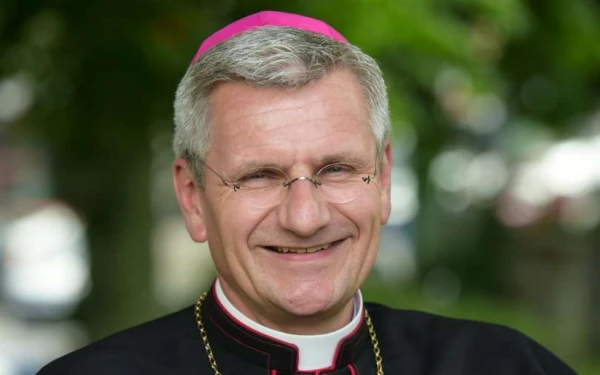
CNA Staff, May 28, 2020 / 04:32 pm (CNA).- An auxiliary bishop of the Archdiocese of Cologne has announced he is no longer participating in the “Synodal Forum” on sexuality that is part of the “Synodal Path” underway in Germany.

Bishop Dominikus Schwaderlapp told the newspaper Die Tagespost on May 28 that the forum was trying to cast into doubt fundamental teachings of the Catholic Church on sexual morality by referring to sexuality as “polyvalent.”

The forum’s final working paper was operating on the assumption that the teachings of the Church on sexual morality required “further development,” the bishop said, adding that such an approach  did not do justice to the Catholic view of the “divine gift of sexuality.”

Schwaderlapp told CNA Deutsch, CNA’s German-language partner agency, that whilst he was withdrawing from the Synodal Forum, officially titled “Life in Successful Relationships,” he still would be a participant in the “Synodal Process.”

“Over the last 50 years in particular, the magisterium of the Church has produced precise statements on questions of sexual morality. In doing so it has deepened and developed the teaching of the Church.”

“’Further development’ can never mean destroying what is there, rather it should build on it. In particular, the Holy Popes Paul VI and John Paul II made a binding statement that sexuality, from the point of view of creation, comprises two meanings that are inseparably linked: the transmission of life and the communication of love,” Schwaderlapp told CNA Deutsch.

Members of the Synodal Forum had been expected to accept the basic premise of a “polyvalent sexuality”, the bishop said, which would predicate a change in the Church’s teaching. No general debate of the presented paper been provided for, Schaderlapp said, which led to his decision to renounce his membership in the forum.

Speaking to CNA Deutsch, the bishop reflected on the papal documents Humanae Vitae and Familiaris Consortio.

“These texts are not ‘food for thought’ but magisterially binding documents,” he said.

The bishop expressed concern that the approaches of the “Synodal Way” are missing the real concerns of Catholic people. He asked whether the “existential questions of the people” were really being dealt with in the process.

“Which of these questions are still relevant when we lie on our deathbed and prepare for the encounter with the heavenly judge – hopefully we will do that then? It seems to me that quite different questions are relevant then, for example, ‘How hard have I tried in my life – day after day – to love God and my neighbour?'”

It was not the alleged “clinging to tradition,” he said, that has alienated people from the Church, “but because we [the Church] are too concerned with ourselves and do not give answers to the existential questions of humankind.”

The bishop stressed that it is precisely in questions of morality and identity that the Church “really has something to say.”

Schwaderlapp also offered the view that “the widening gap between the Church’s teaching and the life of the faithful also tells us that the challenging understanding of sexuality as a gift from God has – at least in Germany – in recent years been criminally neglected. This must change, and urgently so.”


Read More

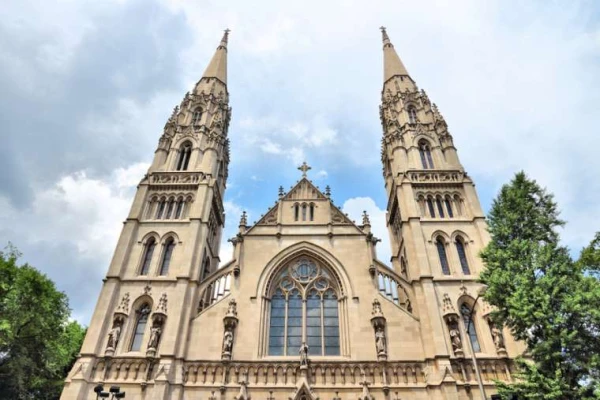
Diocese of Pittsburgh announces next round of parish mergers

CNA Staff, May 28, 2020 / 04:17 pm (CNA).- This summer, the Diocese of Pittsburgh will initiate another round of mergers, bringing its current 152 parishes down to 106. While the consolidation is difficult, Pittsburgh Bishop David Zubik said, it will allow the Church to more effectively carry out its ministry.

“This has not been a simple task. Jesus never promised that it would be easy to carry his message of love and mercy to others. He was clear that sacrifice would be necessary,” the bishop said in a letter to affected parishioners.

“However, you are positioning your new parish for more effective ministry by addressing financial needs, sharing resources and allowing your clergy to focus on the spiritual work for which they were ordained. With your faith in Jesus and empowered by the Holy Spirit, I invite you to warmly welcome and serve each other as you become one parish family.”

This round of mergers will take place on July 1, 2020. It will consolidate over 60 parishes into 15 parishes.

The merger is the latest step in the “On Mission for The Church Alive” initiative, which is reorganizing what began as 188 parishes into what will be fewer than 60 parish groupings.

The diocese’s strategic planning initiative began in 2015 in part as a response to declining Mass attendance, the financial struggles of some parishes, and fewer priests.

The situation was exacerbated by the 2018 Pennsylvania grand jury report, which detailed sexual abuse allegations in six of Pennsylvania’s eight Latin-rite dioceses, including Pittsburgh. Earlier this year, CBS Pittsburgh reported that since the report’s release, Mass attendance had dropped 9% and offertory donations declined 11%.

“Since 2018, you have journeyed together on a road that is intended to unite you on the mission to bring the Good News of Jesus to your neighbors and to strengthen all of you in faith,” Bishop Zubik said.

“Southwestern Pennsylvania is radically different than it was 100, 50, 20, even 10 years ago, yet the work of the Church and our call from God to bring His love to everyone continues as strong as ever,” he said. “As we address the challenges we face in the Church today, the witness of working and growing together reflects the unity of the Body of Christ that is essential to our mission.”

Among other parish combinations, Holy Angels in Hays, Holy Apostles in South Pittsburgh, and Saint Sylvester in Brentwood will merge into the Blessed Trinity Parish; and two Wexford churches – Saint Alexis and Saint Alphonsus – will merge into Saint Aiden Parish.

The diocese will also reorganize the four regional vicariates into two regional vicariates – a North and South Vicariate – which will be used to assist future parish groupings. Father John Gizler III has been appointed Regional Vicar for the North Vicariate, and Father Joseph Sioli will be Regional Vicar for the South Vicariate.

Bishop Zubik expressed gratitude for the clergy and church leaders who have helped the “On Mission” project become a reality.

“Their examples of collaboration, courage and compassion have inspired me. Their collective efforts have gone beyond the practical matters related to merging parishes. They have encouraged their parishioners to deepen their relationship with Jesus and with each other,” he said in a statement.

The bishop added that as the “On Mission” plan unfolds, the Church will need to rely heavily on the inspiration of the Holy Spirit.

“[M]ay we unceasingly rely on the will and the wisdom of the Holy Spirit, the Advocate who gives us life as we come together for vibrant worship, responsive pastoral care and powerful evangelization,” he said.


Read More

The Eucharistic Famine & Homeschool Blues

At the outset of the Covid pandemic, every single diocese in the United States suspended public Masses. For over two months—including Easter Sunday—most of us have been in exiled from our churches and chapels. Was it right for the bishops to keep us from the Blessed Sacrament? Was it right to place our physical health […]

Read More

Recent Comments

    Categories