Select Page

Month: March 2020

Hospitals, states consider how to distribute healthcare if coronavirus surges

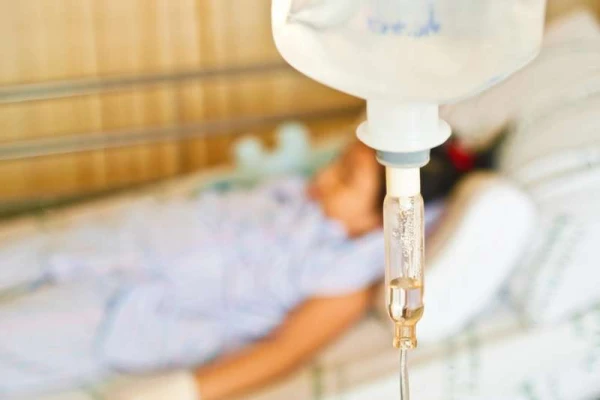
Washington D.C., Mar 24, 2020 / 02:30 pm (CNA).- In Italy, which has the most deaths from coronavirus, some doctors have said they have had to overlook older patients to focus on younger ones who are more likely to survive as the virus overwhelmed the healthcare system.

In the US, states and hospitals are considering how to distribute healthcare if demand for limited resources exceeds what can be provided. Worldwide, there are 332,930 confirmed cases of Covid-19, and 14,509 deaths. Of those, 31,573 cases are in the US, where there have been 402 deaths due to the virus.

Colorado adopted a Crisis Standards of Care Plan in 2018 as guidelines “to assist healthcare providers in their decision making with the intention of maximizing patient survival and minimizing the adverse outcomes that might occur” when healthcare needs “far surpass” what is available.

“It’s very military-style triage,” Dr. Matthew Wynia of the University of Colorado Anschutz Medical Campus told The Colorado Sun’s John Ingold. “If we get hit that hard, we are going to have some very difficult decisions to make. And we can’t wait until then to get ready for that … it would be irresponsible not to plan right now for a huge surge of patients.”

Colorado’s crisis standards of care would be activated only after the governor declares a public health emergency, and even then, it would implemented locally, depending on the conditions in individual counties or communities.

Among the goals of the state plan is to “minimize serious illness and death by administering a finite pool of resources to those who have the greatest opportunity to benefit from them”.

Guiding ethical elements of Colorado’s plan are stewardship of resources, duty to care, soundness, fairness, reciprocity, proportionality, transparency, and accountability.

It focuses especially on fairness, proportionality, solidarity, and being participatory.

The Colorado guidelines say healthcare providers should be fair to all the affected “without regard to factors such as race, ethnicity, socioeconomic status, disability or region that are not medically relevant.”

With regard to solidarity, the Crisis Standards of Care Plan says that “all people should consider the greater good of the entire community.” It adds that for transparency and accountability, “the community, healthcare providers, and emergency management agencies” should be engaged during the process.

Dr. Charlie Camosy, an associate professor of theology at Fordham University, last week discussed with CNA the principles that should be used as doctors might face choices over healthcare distribution.

“There are virtually no universally agreed-upon principles to do this–excepting, perhaps, the idea that health care providers, first-responders, law enforcement, and others primarily responsible for the day-to-day functioning of the polity should get priority,” he stated.

For Catholics, he said that serving “the most vulnerable first” is a fundamental principal.

“Those people are Christ to us in a special way and we will be judged according to how we treat them. We don’t think about, say, how long they might stay on a ventilator vs. how long someone we might encounter next week might stay on a ventilator. We also don’t think about how long they might have to live if the treatment is successful vs. how long other someone we might encounter next week might live if their treatment is successful.”

He added that it makes sense among limited resources “to treat those first who are most likely to benefit from the treatment. And there may be a disproportionate number of younger people in the former category. But that is not the same as deciding that we ought to prefer the young to the old because they have longer to live.”

While the US bishops’ Ethical and Religious Directives for Catholic Health Care Services do not directly address resource allocation during crises, they do note that “Catholic health care should distinguish itself by service to and advocacy for those people whose social condition puts them at the margins of our society and makes them particularly vulnerable to discrimination: the poor; the uninsured and the underinsured; children and the unborn; single parents; the elderly; those with incurable diseases and chemical dependencies; racial minorities; immigrants and refugees.”

The directives add that “in particular, the person with mental or physical disabilities, regardless of the cause or severity, must be treated as a unique person of incomparable worth, with the same right to life and to adequate health care as all other persons.”

In Washington, advocates of persons with disabilities have filed a complaint saying that crisis care guidelines issued by the state health department are improperly discriminatory.

“There’s been a long history of people with intellectual, development mental disabilities having our medical care denied,” Ivanova Smith, one of the complainants, told NPR. “Because we’re not seen as valuable. We’re not seen as productive or needed. When that’s not true. We have people that love us and that care for us. Many people with disabilities work and they do amazing things in their communities but they need that life saving care.”

Attorneys representing the Thomas More Society and the Freedom of Conscience Defense Fund published a memo March 23 urging that “policies rationing care on the basis of disability or age … would violate federal law regarding invidious discrimination.”

“Anticipated longevity or quality of life are inappropriate issues for consideration. Decisions must be made solely on clinical factors as to which patients have the greatest need and the best prospect of a good medical outcome. Therefore, disability and age should not be used as categorical exclusions in making these critical decisions,” the memo concludes.

Peter Breen, vice president of the Thomas More Society, commented that “The horrific idea of withholding care from someone because they are elderly or disabled, is untenable and represents a giant step in the devaluation of each and every human life in America.”

Other possible criteria for healthcare distribution during crises include first-come-first-served, or a lottery system.

Read More

Vatican City Has 4 Cases of Coronavirus

By Hannah Brockhaus/CNA. | VATICAN CITY — The director of the Holy See’s press office, Matteo Bruni, said Tuesday there are now a total of four people connected to Vatican City who have tested…

Read More

Vatican City has 4 cases of coronavirus

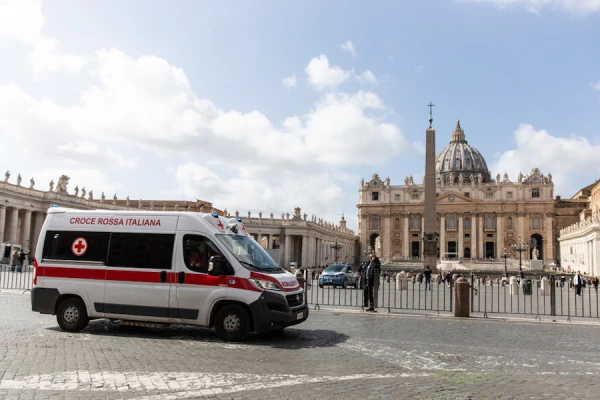
Vatican City, Mar 24, 2020 / 12:25 pm (CNA).- The director of the Holy See’s press office, Matteo Bruni, said Tuesday there are now a total of four people connected to Vatican City who have tested positive for the coronavirus.

Included in this number, Bruni said, is the first confirmed case of COVID-19 connected to Vatican City, which was announced March 6. Of the subsequent cases, two are employees of the Vatican Museums and a third is an employee of the merchandise office.

Bruni stated March 24 that these four patients “had been placed in solitary confinement as a precaution before they tested positive and their isolation has already lasted for over 14 days; currently they are being treated in Italian hospitals or at home.”

The Vatican’s first case of the coronavirus was found after a patient tested positive in the city state’s outpatient health facilities March 5. The facilities were then closed for one day to allow for their sanitation.

The confirmation of COVID-19 cases came after information that the Vatican’s dicasteries and other offices will continue to be operational during the Italian lockdown.

The press office informed journalists March 24 that increased measures have been put in place to avoid the spread of the coronavirus, such as increasing the numbers of those who work remotely, thus minimizing the number of staff present in offices.

This is to both “limit the movement of employees and at the same time guarantee the exercise of the Petrine ministry,” the release stated.

“The heads of the dicasteries are entrusted with the task of continuing to ensure essential services to the Universal Church.”

During the Italian coronavirus lockdown, Pope Francis has continued certain aspects of his daily schedule, including his morning Mass, general audiences, and Angelus, however they are being shared over video livestream and without the presence of the public.

His schedule has also included one-on-one meetings with Roman curia officials.

The number of active COVID-19 cases in Rome’s region of Lazio has grown to over 1,500. There have been 80 deaths from the virus in the region. Overall, more than 6,800 people have died in Italy from the coronavirus.


Read More

Mass is not cancelled

Like many of you, our Sunday morning was spent, not in a pew, but in our living room, watching Mass on television. For a few hours on Saturday, it looked as though we might be […]

Read More

Despite legal exemption, UK bishops close church buildings in response to coronavirus

London, England, Mar 24, 2020 / 11:30 am (CNA).- The bishops of United Kingdom have ordered the closure of all Catholic churches, even though they were exempted from shuttering by the countrywide stay-at-home order.

U.K. Prime Minister Boris Johnson issued the lockdown directive on Monday evening. The rules restrict when and for what purpose someone is permitted to leave their home; these four reasons include shopping for necessities, exercise, medical needs, and traveling to and from work for jobs deemed essential. 

Houses of worship were specifically exempted from the stay-at-home order, and the guidance provides that “places of worship should remain open for solitary prayer” despite the suspension of public religious services.

Going beyond the government guidance, the Catholic Bishops’ Conference of England and Wales (CBCEW) made the decision to close all churches to the public until further notice.

“Following on from the PM’s message last night, all churches must close and remain closed,” said Cardinal Vincent Nichols on Tuesday.  “It is essential that we all follow this instruction, painful and difficult though it is. As our churches remain closed, let us open our hearts even wider,” he said.

In a video posted on Twitter, Cardinal Nichols said it was “not essential” for people to go to their churches to pray.

“We have to learn more and more that our prayer is rooted in our hearts and can be shared with our families. Open churches will only tempt people to travel. And that is not good practice now,” he said. 

Nichols encouraged people to use the internet and other technology to “encourage one another.” 

“When you phone your parents or your parents phone you, why not suggest that you end with a moment of prayer together? Say that Hail Mary, say a prayer that you know – but say it together. It’s a comfort and a reassurance,” said Nichols. 

Similar provisions were also announced Tuesday by the Catholic bishops of Scotland.

On the website of the Bishops’ Conference of Scotland said that “the Bishops of Scotland agree that our churches should be closed during this period of national emergency for the common good.”

“There will be no celebrations of baptism or marriage but we will continue to offer prayers for those who have died and for their families who mourn their passing.”

“The Church is not only a building but the people of God at prayer wherever they may find themselves,” the Scottish bishops said. “We encourage all Catholics and all people of faith to pray unceasingly in their homes for our nation at this time in particular for our political leaders, our health care professionals and all those suffering from the virus. May this lived Lenten experience lead us to new life and healing at Easter.”

On the CBCEW website, Nichols was quoted saying that the decision to close the churches came from a desire to be “good citizens,” and was the correct choice at this time. 

“We’re going to play our full part in it. That was the call of St. Paul that we ought to be good citizens and today we ought to be good citizens playing our part in the protection of the vulnerable, in our support for the NHS and in the preserving of human life, which is so precious to God in the face of this virus,” said Nichols. 

The CBCEW website explained the imprudence of keeping churches open, even though the government did say it was permissible.

“None of [the government’s] four specific reasons for leaving home concur with the visiting of a church for solitary prayer,” said the statement. “In addition, keeping churches open could undermine the desire of the government for people to remain at home, the very fact of them being open may draw people out of their homes, many of which would be the most vulnerable to infection.” 

The bishops’ conference said that they had received advice from Professor Jim McManus, vice president of the Association of Directors of Public Health. McManus had spoken with “a senior civil servant” who agreed that the carve out for houses of worship to remain open was “a mistake.” 

“Keeping churches open sends an utterly inconsistent message and therefore they must be closed for the benefit of others and stopping infection,” said the statement.

While Catholic Masses, including funerals, baptisms, and weddings, have been suspended or postponed until further notice in the United Kingdom, other faiths are continuing with their traditions. 

Chief Rabbi Ephraim Mirvis, the chief rabbi of United Hebrew Congregations of the Commonwealth, posted on Twitter that he was thankful for the religious exemptions in the order, which included that Jewish religious practices would be allowed despite the lockdown.

“I am deeply grateful to the Government for their efforts to ensure that even in these times of profound challenge, due consideration was given to Jewish and Muslim burial rites in emergency legislation,” said Rabbi Mirvis.

Read More

All churches closed in Archdiocese of Toronto

After previously cancelling public celebrations of the sacraments including daily and Sunday Masses, the Archdiocese has taken the additional step of entirely closing its churches to public access.

“In view of the increased restrictions on public acti…

Read More

Recent Comments

    Categories