Select Page

Month: March 2020

Hope is More Contagious Than Fear

By Ryan and Mary-Rose Verret | The power of hope over fear is foundational to our Catholic faith! Which are you spreading? Which one are you fueling? How can you have a sense of humor about the otherwise unnerving situation we…

Read More

#9515 Ask a Priest – Msgr. Eugene Morris

Do you have a question that you’ve always wanted to pose to a priest? Today is your day!
Questions Covered:

02:43 – I have noticed that lectors and altar servers at Masses being streamed online are not receiving Communion at those Masses, …

Read More

#9514 Ask a Priest – Msgr. Eugene Morris

Do you have a question that you’ve always wanted to pose to a priest? Today is your day!
Questions Covered:

14:35 – I was atheist for most of my life and am struggling to transition into being Catholic now, in that, it is difficult to talk…

Read More

How CRS is helping refugees amid coronavirus

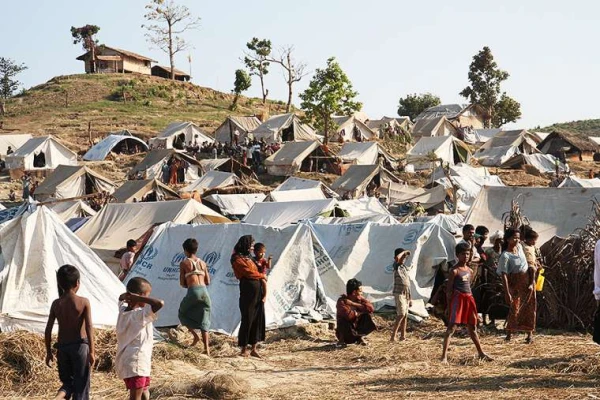
Dhaka, Bangladesh, Mar 27, 2020 / 04:11 pm (CNA).- There are nearly 700,000 refugees living in close quarters in the world’s largest refugee settlements in Bangladesh, making them vulnerable as the coronavirus (COVID-19) pandemic spreads. 

Caroline Brennan, Catholc Relief Services’ emergency communications director, told CNA that in areas where CRS is serving refugees, such as in Bangladesh, they are adapting their programs as quickly as possible so they are still relevant and safe during the pandemic.

“In this case, when we’re looking at a virus like the coronavirus…there is such a heightened vulnerability in these settlements, where you have very large populations in extremely congested environments, and where multi-generational family members are living in really tight quarters,” Bennan said.

Many countries have adopted stay-at-home orders and strict social distancing measures in response to the virus. For the Rohingya refugee population in Bangladesh, Brennan said, and in many other areas where refugees are, it can be almost impossible for people to distance themselves from others in this way.

There may be up to ten people living in a small space with nowhere else to go, she said, which means access to safe space is a problem, as well as access to the means for refugees to keep clean.

In addition, Bangladeshi authorities fear that the coming cyclone season will cause sewage to overflow into flimsy shelters and possibly spread the coronavirus, the New York Times reported this week.

Brennan said CRS, along with local partners, has been providing hygiene and sanitation supplies to the camps, as well as training and materials for local health institutions.

One of the biggest priorities, Brennan said, is simply communicating information about how to protect oneself from the virus, but doing so in the camps in a safe way.

“Obviously, we don’t want to bring people together in large groups,” she said.

“And often times, that’s how you conduct programming— bringing people together for a training or bringing children together in a classroom.”

CRS has had to adapt to using large posters, printed in several languages, to get the word out rather than gathering people in groups to convey information about how to keep themselves safe from the virus, Brennan said. 

Food in the refugee camps is often distributed in large groups, too, she said. CRS has adapted by doing more food distributions, but with smaller numbers of people, spread further apart, and with handwashing stations provided to lessen the chance of infection.

In some areas, refugees have regarded humanitarian workers with suspicion as possible carriers of the disease. Brennan said she is grateful that CRS has been present in many refugee areas for a while, which helps to build trust and allows CRS to communicate more effectively.

“We can convey information which can be received with credibility, and that’s crucial,” she said.

Read More

Watch Today’s Mass from EWTN

By Daily Mass | During this time, especially during the Lenten season, we wanted to remind you that EWTN broadcasts the daily Mass live at 8 a.m. Eastern from Our Lady of the Angels Chapel on the EWTN campus in Irondale,…

Read More

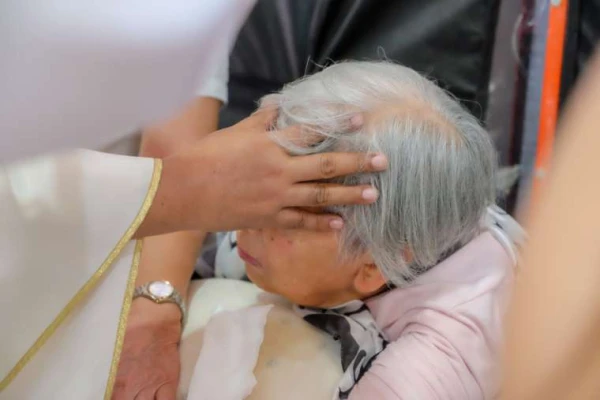
Diocese permits nurses to anoint during sacrament of the sick

Washington D.C., Mar 27, 2020 / 02:54 pm (CNA).- A Massachusetts diocese has authorized a change to norms for the sacrament of the anointing of the sick, permitting a nurse, rather than a priest, to conduct the physical anointing, which is an essential part of the sacrament.

“Effective immediately I am allowing the assigned Catholic hospital chaplains, standing outside a patient’s room or away from their bedside, to dab a cotton swab with Holy Oil and then allow a nurse to enter the patient’s room and administer the oil. If the patient is alert, the prayers may be provided via telephone,” Bishop Mitchell Rozanski told Springfield priests in a March 25 message.

“The hospitals need to control bedside access to patients so as to reduce transmission of COVID-19 as well as to preserve very limited supplies of masks and other personal protection equipment(PPE),” Rozanski explained, noting that the policy was devised in consultation with “pastoral services at both Mercy Medical and Baystate Medical centers.”

Mercy Medical Center is a Catholic hospital, and a part of Trinity Health, a Catholic healthcare system.

The Church teaches that only a priest may validly perform the sacrament.

A spokesman for the Diocese of Springfield told CNA March 27 the permission reflects diocesan policy “for now.” The spokesman said the policy was proposed by the Trinity Health system, and has also been proposed to other dioceses.

Trinity Health has not responded to questions from CNA. 

According to the Church’s canon law, “the anointing of the sick, by which the Church commends the faithful who are dangerously ill to the suffering and glorified Lord in order that he relieve and save them, is conferred by anointing them with oil and pronouncing the words prescribed in the liturgical books.”

“The celebration of the sacrament includes the following principal elements: the ‘priests of the Church’ – in silence – lay hands on the sick; they pray over them in the faith of the Church – this is the epiclesis proper to this sacrament; they then anoint them with oil blessed, if possible, by the bishop,” the Catechism of the Catholic Church explains.

“Only priests (bishops and presbyters) are ministers of the Anointing of the Sick,” the catechism adds.

The minister of the sacrament, who must be a priest for its valid celebration “is to perform the anointings with his own hand, unless a grave reason warrants the use of an instrument,” according to canon 1000 §2 of the Code of Canon Law.

The Congregation for Divine Worship and Sacraments has spoken on related questions regarding the sacrament of baptism. In a letter published in 2004 by the Canon Law Society of America, Cardinal Francis Arinze, then prefect of the congregation, explained that “if a minister administering the Sacrament of Baptism by infusion pronounces the words of the sacramental form but leaves the action of pouring the water to other persons, whoever they may be, the baptism is invalid.”

With regard to the anointing of the sick, in 2005, the Congregation for the Doctrine of the Faith explained “the Church has identified down the centuries the essential elements of the Sacrament of the Anointing of the Sick…a) subject: the seriously ill member of the faithful; b) minister: “omnis et solus sacerdos”; c) substance: the anointing with blessed oil; d) form: the minister’s prayer; e) effects: salvific grace, the forgiveness of sins, the relief of the sick person.”

“The Sacrament is not valid if a deacon or a layman attempts to administer it. Such an action would be a crime of simulation in the administration of a sacrament, to be penalized in accordance with can. 1379, CIC,” the congregation added.

Canon law establishes that a person who “simulates” a sacrament, or celebrates it invalidly, is subject to ecclesiastical discipline.


Ed Condon contributed to this report.


Read More

Recent Comments

    Categories