Select Page

Month: March 2020

Mar. 5 Thursday of the First Week of Lent, Weekday

Historically today is the feast of St. John Joseph of the Cross who was born on the Island of Ischia in Southern Italy. At the age of sixteen years he entered the Order of St. Francis at Naples, amongst the Friars of the Alcantarine Reform, being the f…

Read More

Catholic Exchange 2022-03-07 05:00:00

“Christian charity is not a blind disregard of facts, a refusal to see things as they are, a condoning of the sins of others. It is the love of the sinner springing from the love of God, which necessitates the hatred of sin.”
-Fr. Basil W. Maturin,&nbs…

Read More

St. John Joseph of the Cross

John Joseph was born to a noble family on the Island of Ischia in Southern Italy in 1654. Even in childhood he was a model of virtue. Though he could afford nice clothes, out of respect for the poor, John Joseph preferred to wear simple clothing. As a teenager of sixteen, he entered the Franciscan […]
Read More

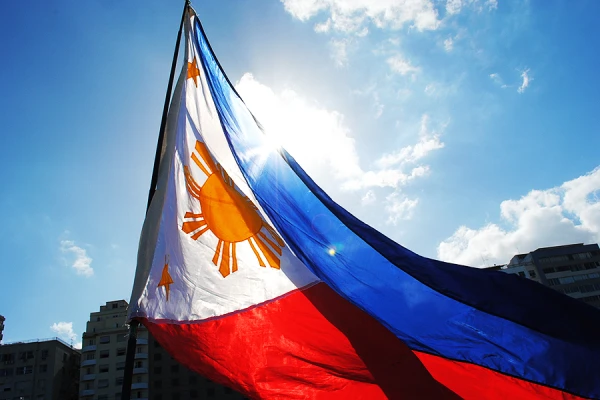
Bishop encourages peace zones amid Filipino communist rebellion

Manila, Philippines, Mar 4, 2020 / 06:18 pm (CNA).- After a recent military attack in the southern Philippines, a bishop has called on the government and rebel forces to withdraw soldiers from tribal communities.

Bishop Valentin Dimoc, Vicar Apostolic of Bontoc-Lagawe and the Filipino bishops’ chair for indigenous peoples, has asked both state and non-state military to leave tribal lands alone following reports on displaced communities and civilian violence.

Nearly 100 families were reportedly forced to flee from Diatagon, a village in the Surigao del Sur province, Feb. 29. Government troops had swept through the area looking for communist rebels, the human rights group Karapatan said, according to UCA News.

Three people were injured during a shootout among the houses of the village. The attack also injured a five-year-old child.

Army spokesman Ezra Balagtey blamed the rebels for the violence in the village. He said they were trying to prevent “the establishment of a government school for tribal children,” UCA News reported.

Bishop Dimoc issued an appeal to the National Commission on Indigenous Peoples and Office of the Presidential Adviser on the Peace Process. He encouraged the establishment of “peace zones” which would prohibit any arm groups from entering the tribal areas.

“The military and the communist (rebels) must honor such policy,” said the bishop, noting that it will help diminish displacement, violence, and bloodshed, LICAS News reported.

On Feb. 29, communist leader Jose Maria Sison said the group was still open for peace talks but not with government officials. He said he would rather negotiate with clergymen than politicians.

Three Filipino bishops accepted roles as negotiators at the 43rd Samar Island Partnership for Peace and Development.

Bishop Crispin Varquez of Borongan expressed hope that these peace talks would lead to an end to the insurgency, which has affected Samar’s economy and development.

“We are more than willing to cooperate and do the work for peace and progress of the island,” Bishop Varquez said, according to Philippine News Agency.

Read More

Moral Meltdown: A Magisterial View of the Morality of Embryo Adoption

Perusing the website of Snowflakes, an American adoption agency, the viewer is presented with myriad photos of respectable, young-to-middle-aged couples radiantly embracing beautiful, healthy, beaming infants and young children.  Beneath a prominent quote from Sacred Scripture,[1] the agency displays glowing reviews from its adoptive families, emphasizing the care taken to place children in families deemed[…]

The post Moral Meltdown: A Magisterial View of the Morality of Embryo Adoption appeared first on Catholic Insight.

Read More

Portland archdiocese: Coronavirus or no, Communion can be received on the tongue

Portland, Ore., Mar 4, 2020 / 06:01 pm (CNA).- The right to receive Holy Communion on the tongue has been affirmed by the Archdiocese of Portland in Oregon, which noted Monday that the risk of transmitting infection when receiving on the tongue or hand is “more or less equal.”

“We consulted with two physicians regarding this issue, one of which is a specialist in immunology for the State of Oregon. They agreed that done properly the reception of Holy Communion on the tongue or in the hand pose a more or less equal risk,” the archdiocese’s office of divine worship wrote March 2.

“The risk of touching the tongue and passing the saliva on to others is obviously a danger however the chance of touching someone’s hand is equally probable and one’s hands have a greater exposure to germs.”

The office said its statement came after some parishioners had indicated that they had been denied Holy Communion on the tongue, or told that reception on the tongue “has been banned in certain parishes.”

“After consulting with the Archbishop this office would like to clearly communicate that a parish cannot ban the reception of Holy Communion on the tongue, nor may an Ordinary or Extraordinary minister refuse a person requesting Holy Communion on the tongue,” the office stated.

The worship office emphasized that ministers of Holy Communion should be “able to distribute Holy Communion without risk of touching the hands or the tongue,” and that “parishioners should also be instructed how to receive Holy Communion properly either on the tongue or in the hand.”

It added that “if Extraordinary Ministers of Holy Communion feel uncomfortable distributing Holy Communion either in the hand or on the tongue they should be excused from this ministry.”

Many Churches around the world have issued precautionary guidelines for Masses, or cancelled public Masses entirely, because of the coronavirus outbreak which originated in China late last year.

The new strain of coronavirus causes a respiratory disease, COVID-19, and has a fatality rate of roughly 3%. There have been more than 93,000 confirmed cases of coronavirus in 81 countries, and nearly 3,200 deaths, as of March 4. The vast majority of cases and deaths have been in China.

In the US, there have been at least 147 confirmed cases in 16 states. These are concentrated in Washington, where there have been 32 cases, 10 of whom have died. Of those 10, seven were linked to a nursing home in a Seattle suburb.

In Oregon, there have been two confirmed cases and no deaths.

The Portland archdiocese’s further considersations followed upon a Feb. 28 memo which offered a number of guidelines regarding possible transmission of disease.

The guidelines noted that Communion under both species “is not always necessry or advisable,” and that “it is left to the prudent judgment of the pastor whether communion under both kinds should be offered.”

Citing the fact that “our hands are often transmitters of the cold and flu,” it said that self-intinction should not be permitted, which is, in any case, “prohibited by law”; that rather than shaking hands during the sign of peace, “a nod of the head and a verbal greeting of peace … may be used”; and that “holding hands during the Our Father should be discouraged.”

Extaordinary Ministers of Holy Communion should, it said, “take special precautions” and frequently wash their hands.

It added that those who are ill are “excused from Sunday worship,” and that the ill “are encouraged to make a spiritual communion.”

Parishes that distribute Holy Communion only under the species of bread “should take the opportunity to catechize the faithful regarding the Church’s teaching about the Most Holy Eucharist, especially regarding the true, real and substantial presence of Our Lord Jesus Christ under either species,” the archdiocese noted.

The archdiocese added that after consulting with Oregon’s public health office, it found that “scientific consensus seems to be that although bacteria & viruses can be found on the communion cup, despite wiping and able to survive the alcohol, the risk of transmission is thought to be low. However, the cessation of the distribution of Holy Communion from the Chalice would significantly lower the risk.”

In addition, the archdiocese quoted a statement from the Oregon Health Authority that “We have thousands of cases of influenza and many hundreds of hospitalizations from influenza right here in the Portland area this year. And we have zero cases of this Novel Corona virus. Right now, a bigger threat to all of us is influenza.”

It reiterated that “Holy Communion under both kinds is not mandatory at any Mass in the Archdiocese of Portland.”

The worship office also recommended “that all parishes cease the distribution of the Precious Blood for the time being and that the Sign of Peace be eliminated or done without the chance of physical contact.”

The subsequent further considerations from the Portland archdiocese referred to Redemptionis sacramentum, the Congregation for Divine Worship’s 2004 instruction on certain matters to be observed or to be avoided regarding the Most Holy Eucharist, which notes that “each of the faithful always has the right to receive Holy Communion on the tongue, at his choice.”

Immediately to Portland’s north, in the Archdiocese of Seattle, Archbishop Paul Etienne issued a differing set of directives in response to coronavirus.

The Northwest Catholic wrote March 3 that Archbishop Etienne “said that holy water should be removed from fonts” and “that Communion hosts should be received only in the hand, not on the tongue.”

The archdioceses of Portland and Seattle agree, however, that Communion should be under one species, that the sick should stay home from Mass, and that everyone should practice good hygiene and “avoid hand-to-hand contact during the Our Father and the sign of peace.”

The Archdiocese of Chicago also released March 3 coronavirus prevention guidelines, which urged hygienic practices and recalled that the ill are not obliged to attend Mass. There have been four confirmed cases of coronavirus in Illinois.

The Chicago archdiocese also said that there should not be physical contact at the sign of peace, hand holding during the Our Father, or the use of holy water fonts, and that Holy Communion should be distributed only under the species of bread.

It added that “given the frequency of direct contact with saliva in the distribution of Holy Communion on the tongue, every consideration should be given by each individual to receive Holy Communion reverently in open hands for the time being.”

The Diocese of Spokane has shared a factsheet and guidelines on coronavirus preparedness it received from Catholic Mutual, which advises these adjustments “after a pandemic has been declared”: distribution of Holy Communion only under the species of bread; not passing collection baskets; and bowing rather than shaking hands at the sign of peace.

According to Catholic Mutual, “Communion on the tongue is strongly discouraged” after the declaration of pandemic. The World Health Organization has not declared a coronavirus pandemic.

Catholic Mutual added that “if the pandemic progresses to a more serious stage” more changes may need to be made, such as the emptying of Holy Water fonts, seating in alternate rows of pews, and limits on the number of attendees to baptisms, weddings, or funerals.

The Catholic Bishops’ Conference of England and Wales issued guidance on coronavirus dated Feb. 27 saying that in the current stage of coronavirus – characterized by very few cases in the UK and no cases in local parishes – the key thing for parishes to do is to urge that good hygiene be maintained.

The are 80 confirmed cases of coronavirus in England, and one in Wales. There has been one death in England due to the disease.

The English and Welsh bishops also directed that that this stage, parishes “ask anyone with cold or flu symptoms to refrain from the physical sign of peace, taking communion from the Chalice and advise they should receive the host on the hand only.”

It added that those attending Mass should be asked to sanitize their hands as they enter, and that “there is no need as things stand for the Chalice to be withdrawn or the of sign of peace suspended … This advice would only come if we had a very serious epidemic in the UK.”

The English and Welsh bishops advised that if the situation progresses such that there are a number of cases in local communities or a case specifically linked to a parish community, then Communion should be distributed only under the species of bread, the Host is “to be given on the hand only”, and that care should be taken in distribution that the minister not touch the recipient’s hands.

In that stage, the bishops also advise the suspension of the physical sign of peace, removal of holy water stoups, cessation of use of shared hymn books and missals, and not passing a collection plate.

Should a third stage be reached, when there are many cases in local parishes, the English and Welsh bishops said that “Mass and Liturgy in public should be suspended and parish gatherings suspended.”

The Latin Mass Society issued a statement March 2 welcoming the English and Welsh bishops’ guidelines, while noting they “do not take the form of a decree with the force of canon law.”

The group noted that at celebrations of the extraordinary form of the Roman rite, “the Sign of Peace is not given among members of the congregation; the Precious Blood is not distributed to the Faithful (from the Chalice); and Extraordinary Ministers of Holy Communion are not employed. In these respects these celebrations already adhere to or render unnecessary recommendations given in the Guidelines for a heightened level of hygiene necessary in the case of a more serious outbreak of the virus.”

The Latin Mass Society added that in Masses said in the extraordinary form, Holy Communion “may not be distributed in the hand, according to the universal liturgical law applicable to them. Should the spread of COVID-19 necessitate the suspension of the distribution of Holy Communion on the tongue, this would mean the suspension of the distribution of Holy Communion to the Faithful in these celebrations.”

It noted that “the Communion of the Faithful is in no way necessary to the validity or liceity (in such circumstances) of the Mass. Should prudence dictate the necessity for such a step, the Faithful should be encouraged to make a ‘Spiritual Communion’.”

“We wish to observe, however, that the distribution of the Host in the hand does not appear to be less likely to spread infection than the distribution on the tongue,” the Latin Mass Society wrote. “On the contrary, distribution on the hand has the result that the Host touches possibly infected surfaces, the palm of the left hand and the fingers of the right hand of the communicant, which is avoided in distribution by a priest directly onto the communicant’s tongue.”

Read More

French bishop: Fear the ‘epidemic of fear’ more than coronavirus

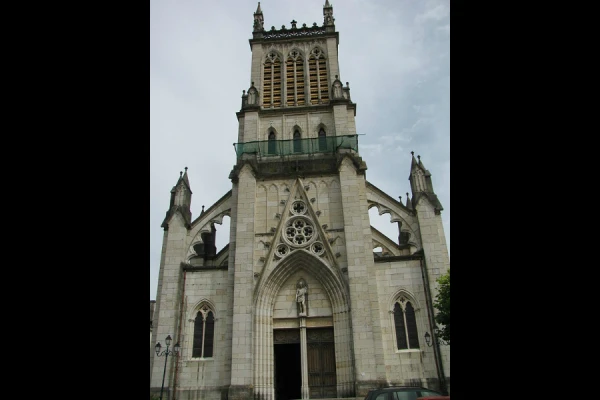
Belley, France, Mar 4, 2020 / 04:37 pm (CNA).- People should be more concerned about the epidemic of fear than the coronavirus outbreak, Bishop Pascal Roland of Belley-Ars has said.

“More than the epidemic of coronavirus, we should fear the epidemic of fear! For my part, I refuse to yield to the collective panic and to subject myself to the principle of precaution that seems to be moving the civil institutions,”  Bishop Roland wrote in a column at his diocesan website.

“So I don’t intend to issue any specific instructions for my diocese. Are Christians going to stop gathering together for prayer? Will they give up going see and help their fellow man? Apart from measures of elementary prudence that everyone takes spontaneously to not contaminate others when you’re sick, it’s not advisable to add on more,” he said.

Many Churches around the world have issued precautionary guidelines for Masses, or cancelled public Masses entirely, because of the coronavirus outbreak which originated in China late last year.

The new strain of coronavirus causes a respiratory disease, COVID-19, and has a fatality rate of roughly 3%. There have been more than 93,000 confirmed cases of coronavirus in 81 countries, and nearly 3,200 deaths. The vast majority of cases and deaths have been in China.

France has had 212 confirmed cases, and four deaths.

Bishop Roland pointed out that during the great plagues of the past, Christians joined together in common prayer, ministered to the sick, attended the dying, and buried the dead. They did not turn away from God or their neighbor.

“Doesn’t the collective panic we are witnessing today reveal our distorted relationship to the reality of death? Does it not manifest the anxiety-inducing effects of losing God?” he asked.

Bishop Roland said that “we want to hide from ourselves the fact that we’re mortal, and having closed off the spiritual dimension of our life, we’re losing ground. Because we have more and more sophisticated and efficient techniques available, we claim to master everything and we obscure the fact that we’re not the masters of life!”

Coronavirus is an occasion to “remind ourselves of our human fragility,” the French bishop noted, saying that “this global crisis at least has the advantage of reminding ourselves that we live in a common home and that we’re all vulnerable and interdependent and that it’s more urgent to cooperate than to close our borders!”

The bishop observed that “it seems we’ve all lost our minds! And in any case we’re living in a lie. Why suddenly focus our attention on just the coronavirus?”

He pointed out that in France the ordinary seasonal flu sickens 2-6 million people, and causes about 8,000 deaths.

Continuing, the bishop said that he has no intention of ordering “churches to be closed, Masses to be canceled, eliminating the sign of peace at the Eucharist, or imposing such and such a way of receiving Communion reputed to be more hygienic (that said, everyone can do as they want!) because the church is not a place at risk, but a place of health. It’s a place where we welcome the one who is Life, Jesus Christ, and where through him, with him and in him we together learn to be the living. A church has to remain what it is: a place of hope!”

The Bishop of Belley-Ars asked, “Should you shut yourself up at home? Should you raid the neighborhood supermarket to stock up on reserves to prepare for a siege? No! Because a Christian doesn’t fear death. He’s not unaware that he’s mortal, but he knows in whom he has placed his trust.”

“And a Christian doesn’t belong to himself, his life is given, because he follows Jesus Christ who teaches ‘For whoever wishes to save his life will lose it, but whoever loses his life for my sake and that of the gospel will save it.’”

“So let’s not give in to the epidemic of fear! Let’s not be the living dead! As Pope Francis would say: don’t let them steal your hope!” Bishop Roland concluded.

Read More

Coronavirus: Pastors have discretion as archdiocese’s Office of Worship offers advice

People are wearing surgical masks at liturgies in some parts of the world — and in several cities and dioceses around the globe Mass has been temporarily suspended — as health officials try to curb the spread of a sometimes-deadly coronavirus that originated in China earlier this year.

At this point, there have been no reports of people infected by the virus in Minnesota. 

But officials at the Archdiocese of St. Paul and Minneapolis have heard from people concerned about the coronavirus, designated COVID-19 by world health authorities, and seeking guidance on how to prevent any spread at Mass and church-related functions. 

Read More

Who Really Wrote Roe v. Wade?

By Sue Ellen Browder | Several years ago, while writing a book that included some history on the feminist movement, I traveled to the U.S. Library of Congress to read the Blackmun Papers. During…

Read More

Recent Comments

    Categories